AI Watermarking Standards and Their Limitations
Current watermarking standards cannot reliably detect AI-generated text after editing.
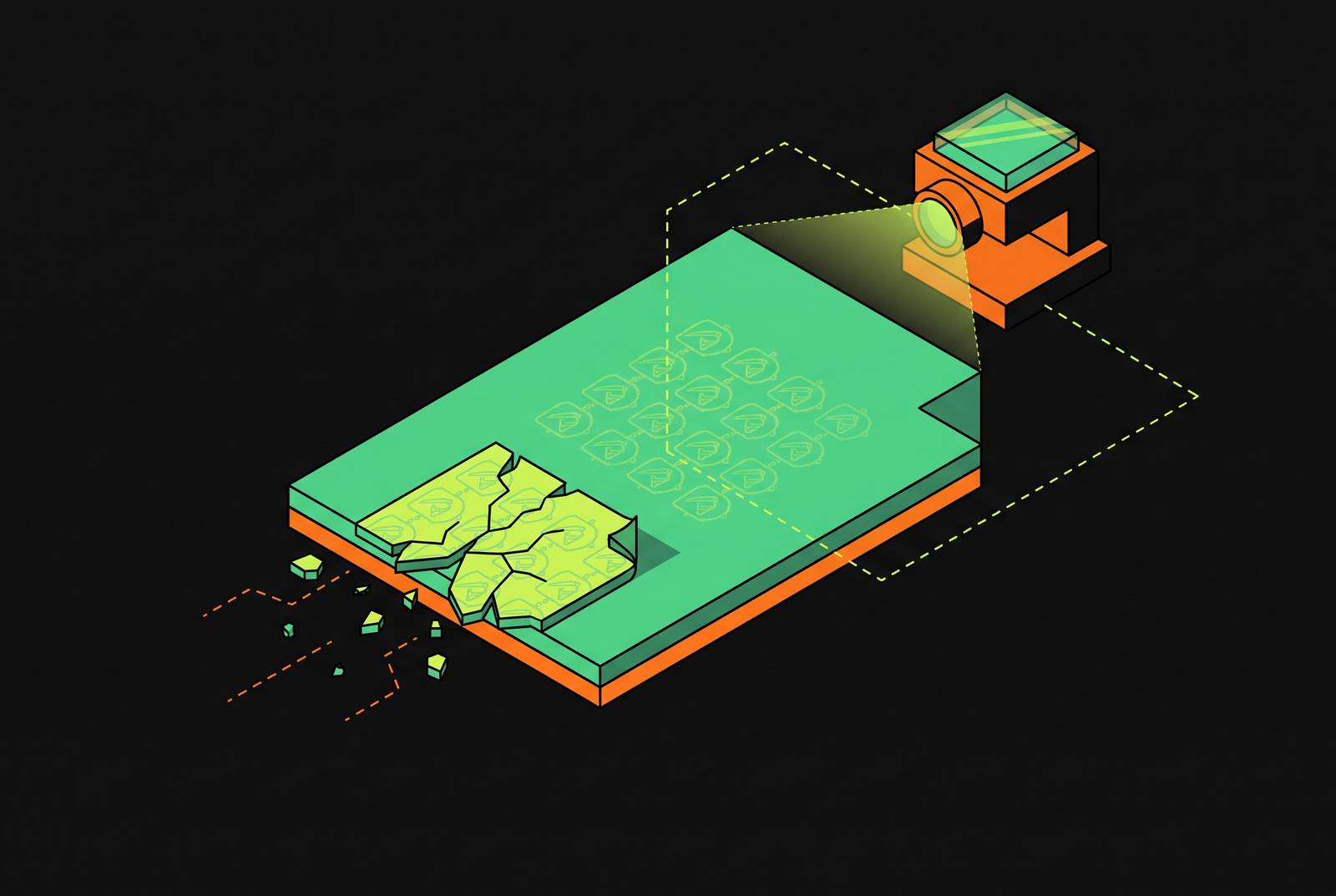
AI watermarking standards turn a genuine governance need into a technical commitment that current infrastructure cannot reliably fulfill. Token-level signals break under editing, provenance standards make different promises, and detection results do not establish reliability across content types. Serious teams therefore need to treat watermarking as one limited instrument within verifiable writing infrastructure.
Why regulators landed on watermarking as the answer to synthetic content
Regulators needed a way to mark synthetic content when it was created and recognize it downstream. Watermarking seemed to offer a direct way to do both. The EU Code of Practice on Transparency of AI-Generated Content drew commitments to provide detection systems from organizations including OpenAI, Anthropic, Meta, Google, and Microsoft. California's AI Transparency Act (SB 942) added similar duties to provide detection tools and disclosures for the AI-generated audio, image, and video it covers. The infrastructure question therefore extends beyond the European market.
The Digital Omnibus, signed July 8, 2026, put off the AI Act's high-risk obligations but left Article 50 mostly as it was. Systems already on the market before 2 August 2026 received a four-month grace period, to 2 December 2026, for the Article 50(2) machine-readable marking obligation. Transparency is live while high-risk obligations are deferred. This split changes compliance planning, but it does not close the more consequential gap between a requirement to make content detectable and the technical infrastructure needed to support that promise.
How text watermarks actually work, and where the mechanism starts to crack
Text watermarking changes how a model chooses tokens while preserving what the resulting passage means. Nemecek et al. describe SynthID-Text as a sampling mechanism that slightly favors token candidates selected by a secret key. A detector with the same key counts those favored choices and, if the passage is long enough, judges whether the pattern points to model-generated text. Nothing separate is added to the text. The evidence lies in the distribution of choices, rather than in a durable record attached to the content.
That dependence limits where the mechanism can work. Code, short factual answers, and constrained formats give the model fewer choices that work, so the watermark has less room to steer generation. Even with watermarking turned on, detection on code is still close to chance. Most LLM watermarks also depend on token identities or exact token contexts without explicitly modeling semantics. As a result, preserving a passage's meaning does not necessarily preserve its signal.
Deployment at scale has not resolved these limitations. Google has deployed SynthID-Text in Gemini since 2024 and published an evaluation using a large sample of live responses. Anthropic disclosed in August 2026 that every Claude model launched on or after August 2, 2026 embeds a text watermark by default, without user opt-out. Its assurances of unchanged quality, no identifying information, and robustness to light editing met objections about degraded code, surveillance, trivial removal, and inescapability. Some objections contradict each other, but that does not settle them. Nemecek et al. identify the inability of outsiders to verify either the assurances or the objections as the substantive governance failure.
Why light editing breaks the watermark signal regulators are counting on
A revised passage may retain the original argument while replacing the word choices and local contexts that encoded its watermark. Translation and routine editorial revision can cause the same problem. Zhang et al. show, under assumptions about the ability to paraphrase, that all text watermarks can be removed, so removability is a risk built into text watermarking as a whole.
Fine-tuning exposes the same weakness at the model level. Downstream derivatives need distinct provenance coverage because changes to the model do not reliably preserve the original marking behavior. Distilled watermarking signals degrade quickly under continued training. This complicates ordinary task adaptation as well as enabling deliberate evasion.
Increasing resistance to removal can require more control over the choices a model makes, with a corresponding risk to output quality. Weakening that control leaves more freedom for natural text but reduces detectability. Every current design still faces some of this trade-off. The compliance requirement asks for persistent evidence, while the production workflow requires freedom to revise the very choices that constitute that evidence.
The spoofing problem: watermarks as a reputation attack surface
Removal is only one direction of failure. Saberi et al. describe spoofing attacks that cause real images to be identified as watermarked and therefore AI-generated. In text, forged watermarks can support false attribution of harmful content to a particular model or cause authentic human writing to be flagged as synthetic. A detector's positive result then cannot, by itself, establish that the named provider produced the content.
This reverses the intended compliance logic. A forged signal records an attempt to manufacture attribution. Detection errors also vary across writing styles, raising an underresearched equity concern for people whose work is disproportionately flagged, including students falsely accused by AI detection tools. OpenAI deprecated its own text classifier because of low accuracy, while Workado drew FTC scrutiny over false marketing claims. These examples show problems with the broader detection layer and why claims made with commercial confidence are no substitute for reliable attribution, though they do not prove that every watermark fails.
The detection arms race: why evasion and detection cannot reach a stable equilibrium
Detection and evasion continually adapt to each other. The ELOQUENT 2026 Voight-Kampff competition demonstrated high surrogate evasion rates through full fine-tuning of an instruction-tuned LLaMA model with a small KL regularization penalty. Evasion therefore exists at the fine-tuning layer as well as in specialized adversarial tooling. Yet successful evasion often produced shorter, simpler, less lexically diverse writing. Defeating a detector can damage the output's usefulness.
The ELOQUENT 2026 lab also found an asymmetry in how attacks succeed. Pushing generated text outside a detector's training distribution reliably beat detection, but attempts to mimic human training data and move inside that distribution failed. Cross-decade register attacks and modernist stream-of-consciousness form used this gap to achieve approximately 50x higher fool rates than previous methods while keeping the writing natural. These gains were not universally transferable. Attacks optimized against a single surrogate detector worked only partly against unseen evaluation classifiers, so how well both attack and defense worked depended on the conditions of the test.
Most LLM fingerprinting methods rely on predefined atypical responses to fixed queries, but that memorization does not survive common steps such as fine-tuning or quantization, and identifiable keys can be filtered. A 2026 ICLR paper on semantically conditioned watermarks claims robustness to fine-tuning, quantization, pruning, and adversarial rewriting as a frontier research result that has yet to become a deployed standard. Individual improvements therefore do not establish a durable control layer for a compliance regime expected to function across changing models and workflows.
Why C2PA metadata and embedded watermarks conflict rather than complement each other
The EU code's two-layer model combines secured metadata with watermarking, but these mechanisms make different promises. Embedded watermarks are designed to survive transformations such as compression, re-encoding, and re-upload. Cryptographic manifests, as in C2PA, verify that a file has not been transformed. Their properties are in tension. A signal designed to remain recognizable after editing is not, by that fact, a record of the original file state.
This distinction complicates the expected compliance stack. The presence of both layers does not make their evidence interchangeable or guarantee the downstream detection regulators expect. EU draft guidelines and technical studies separate audio, image, video, and text because each behaves differently after editing, export, upload, compression, or rewriting. For buyers, the lesson is that a generic vendor claim spanning all media types is insufficient for compliance review. Buyers need to assess which claim remains supportable after the transformations a particular medium undergoes.
Susser, Thickstun, and Vidan at Cornell offer a broader reframing. They argue that treating provenance tools as isolated forensic instruments understates the need to understand synthetic content's effects on media ecosystems, a task distinct from authenticating a particular file. Aggregate monitoring looks at what synthetic content flows through a platform without needing to settle where each item came from. Those uses require different infrastructure, and combining metadata with embedded signals does not erase the distinction.
What multi-model content pipelines do to watermark integrity by default
Routine content production subjects a watermark to transformations before anyone attempts an attack. In 2026, turning an article into an audio file typically involves two or three LLMs from two or three vendors, with the TTS provider only the final stop. Each vendor may, by default, log, cache, or in some cases train on the content. A mark applied at the first generation step does not account for every system that subsequently handles or changes the output.
Content agents add another sequence of transformations. Research, drafting, brand-voice editing, internal linking, and publishing involve model calls and tools such as CMS APIs and knowledge bases. Each LLM handoff is a paraphrase opportunity and therefore a potential watermark-removal event. Compression and format conversion make it harder still to keep the watermark. A workflow can compromise its original signal simply by doing the work it was built to perform.
Human handoffs make this less predictable still. Most products sold as content agents in 2026 automate only a few parts of the full pipeline well, so copy-paste, editorial rewriting, and format changes still take place between the stages they automate. Current standards do not specify how to maintain consistent marking across multiple vendors and model versions. Ordinary production architecture can compromise watermark integrity even when no one intends to evade disclosure.
What verifiable AI writing infrastructure actually requires
The practical response is to separate provenance from writing quality, then make both inspectable through process. Nemecek et al. identify missing institutions including matched output release, configuration disclosure, accredited audits, shared evaluation protocols, and interoperable detection. These are not currently available as a complete infrastructure layer for content teams. Without them, assertions about deployed watermark behavior remain difficult to test independently. A marking obligation alone does not supply the means to evaluate its fulfillment.
A language model treats voice as statistically recognizable patterns, so reliable brand-voice enforcement requires training on the team's own corpus. This creates a direct tension with watermark preservation. The post-training that moves output toward a brand's patterns can destroy an embedded signal inherited from the foundation model. Quality infrastructure must therefore use post-training by design and provide provenance coverage that works even if the inherited signal is lost.
Adversarial multi-model review addresses the single-model limitation through drafting, critique, and revision before convergence. In this quality process, no single model's token distribution dominates the result, reducing the fingerprinting surface and making the writing harder to attribute to one model's stylistic defaults. Test cases and automated style enforcement can give it a record that can be audited, with clear pass/fail criteria. Seven recursions to convergence is one design choice for placing repeated review in infrastructure, where iteration need not depend on manual effort.
For compliance, the corresponding requirement is pipeline-level provenance that records what system produced what, under which configuration. These records tell something different from what a detectable token pattern in the final passage can show. They also fit the distinction the Cornell researchers draw between individual forensics and aggregate ecosystem monitoring. Watermarks may support the latter without reliably settling the former. Verifiable AI writing infrastructure must document the production process and test its outputs, rather than make either responsibility depend on a mark that normal production can erase.
Sources
- Watermarks Without Verification: AI Text Watermarking After the EU AI Act
- From Forensics to Ecosystems: Rethinking Watermarks for Generative AI Oversight
- Who Gets Flagged? The Pluralistic Evaluation Gap in AI Content Watermarking
- Watermarking Without Standards Is Not AI Governance
- Team DArgk at the 2026 ELOQUENT lab for evaluating generative language model quality: Residuals of Humanity: AI Detection Evasion via GRPO Fine-Tuning