Model Diversity and Output Variance in Writing Ensembles
Using multiple models together produces better writing than any single model alone.

Model diversity in a writing ensemble functions as a structural mechanism. It is the structural mechanism that produces either something worth publishing or just a faster version of the same forgettable draft. Understanding where that diversity comes from, and how to engineer it, is now the central problem for anyone building serious writing infrastructure.
Why single models converge on the same output
Every large language model is trained on some overlapping slice of the internet, and that shared diet produces a shared default. Asking a model for a blog post without specifying much tends to produce something polished, hedged, and tonally neutral: competent in the way a hotel lobby is competent, and just as memorable. That flatness is fine for a support ticket. It is a liability when the output is meant to represent a brand's voice in a crowded feed.
The deeper issue is that the variance a single model gives you is not the kind of variance a writing team actually needs. Asking the same model the same question two different ways, phrased to mean the same thing, produces outputs that will differ measurably, an artifact of phrasing rather than deliberate range. That is not range. That is sensitivity to wording, and it means whatever "variety" a single-model workflow produces is really an artifact of how the prompt happened to be phrased that day, not a deliberate set of distinct stylistic choices a team can rely on.
No single model wins across the board, and the data on this is now fairly settled. Improvado's 2026 benchmark testing found Claude scored highest for headline quality and lead-paragraph engagement, while GPT-5.5 produced the most creative variety for social and ad copy, and by late September 2026 the practitioner consensus had shifted to task-based routing across at least Claude Sonnet 5, GPT-5.6 Terra, and Gemini 3.8 Flash. The creative writing leaderboard tells the same story from a different angle: across 46 models tracked as of September 21, 2026, Claude Opus 5 led EQ-Bench Creative Writing ahead of Kimi K3 and GPT-5.6 Sol, with no model claiming a universal win.
Putting those two data points together makes the implication hard to avoid. If no single model dominates every writing task, then routing everything through one model, however capable, is leaving quality on the table before the work even starts.
What "output variance" means in a writing context
Variance, used carelessly, sounds like a synonym for randomness. In a writing ensemble it means something much more specific: the deliberate production of meaningfully different drafts from different models working on the same input.
Two kinds of variance matter, and they are not interchangeable. Structural variance is about the skeleton of the piece: sentence construction, the order arguments arrive in, the rhythm of paragraphs. Stylistic variance is about the skin: register, word choice, how often a model hedges, the emotional temperature of the prose. A useful ensemble needs both, because a set of drafts that vary in tone but share the exact same argument sequence isn't offering much of a real choice.
This is also where prompt sensitivity gets exposed for what it is. That kind of variance is uncontrolled. It happens by accident, depending on how a prompt was worded on a given afternoon. Designed variance, by contrast, is what makes a later voting or critique step meaningful at all. If every model in the ensemble converges on the same draft, the vote isn't a decision, it's a formality. Low variance across ensemble members means the ensemble isn't structurally diverse in the first place, no matter how many model names are listed in the pipeline documentation. The real engineering question, and it is a genuinely hard one, is how to generate variance wide enough to surface real alternatives while keeping it coherent enough that a critic model can still judge the candidates on a shared rubric.
How ensemble architectures generate and exploit variance across models
The research world has stopped treating this as an ad hoc trick and started treating it as its own field. The survey "Harnessing Multiple Large Language Models: A Survey on LLM Ensemble" lays out a curated taxonomy of ensemble architectures, which is a fairly clear signal that this is now a distinct engineering discipline rather than a workaround.
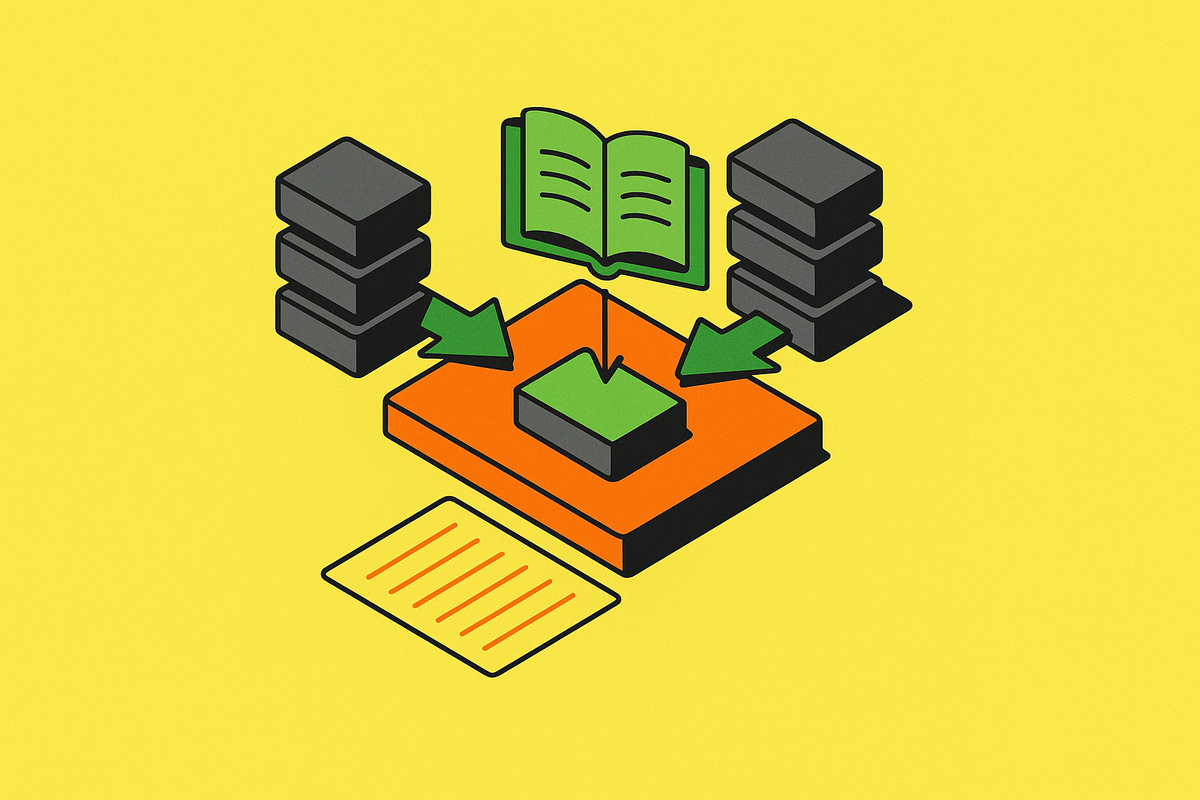
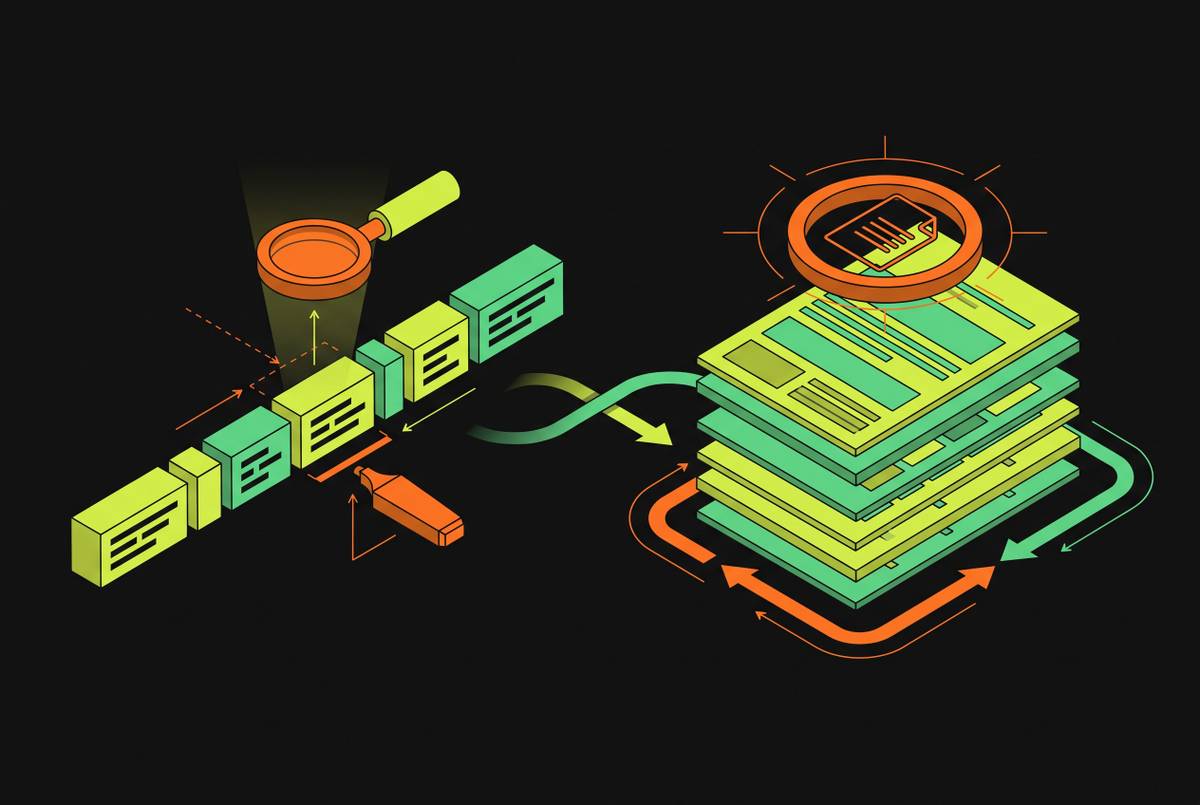
Parallel drafting, routing, and voting/critique steps recur across ensemble designs. Parallel drafting has multiple models write independently on the same prompt, which maximizes raw variance before anything gets synthesized. Routing takes a different approach, assigning different models to different subtasks, drafting versus critique versus style editing, so variance gets structured by function instead of scattered at random. Voting and meta-classification bring in a judge, sometimes a full model, sometimes something as simple as a logistic regression classifier, to evaluate the candidates, though that step only does anything useful if the candidates it's judging are actually different from one another. Stacked ensembles go a step further, feeding the outputs of base models into a meta-model, which compounds variance across layers rather than just collecting it in one place.
The clearest proof that this works comes, somewhat ironically, from detection research rather than generation research. The multirepresentation stacked ensemble framework for AI-generated text detection, published by Ansary and colleagues in the International Journal of Intelligent Systems in May 2026, combines transformer-based contextual embeddings, contrastive semantic representations, handcrafted linguistic features, and LLM-derived meta-features, and it outperforms any single one of those components working alone. That is the detection side of the argument, but the underlying principle runs in both directions: combining components with genuinely different priors beats relying on one component, whether the goal is catching AI text or writing it. Models with different stylistic priors and different training distributions produce a spread of output that no single model, however good, can replicate by itself.
Adversarial pipelines push this a step further. One model drafts, another critiques it for tone and for anything that reads as artificially smooth, and the tension between the two roles is what actually improves the writing, not either model in isolation. That tension affects how much the writing improves, more than which model is used. Benchmarks from AI engineering teams in 2025 showed that improving the harness around a model could outperform swapping in a stronger model entirely, which is why the practitioner framing has shifted from picking the best model to picking the best harness. The harness deserves its own full treatment, and it gets one later in this piece, but the point belongs here too: architecture is doing more work than model choice.
Where model divergence comes from (training distribution, architecture, and stylistic priors)
Three things drive meaningful divergence between models, and none of them are incidental. Training data distribution is the first: models trained on different corpora, or on different weightings of an overlapping corpus, end up with different senses of what "normal" prose even looks like. RLHF and other post-training objectives are the second: models tuned against different human preference signals settle into different defaults for hedging, for directness, for how formal or casual the baseline register is. Architecture and token-prediction strategy are the third: different attention mechanisms and different approaches to context handling produce different sentence-level patterns even when the prompt going in is identical.
None of this is cosmetic. The Voight-Kampff Generative AI Detection task, part of PAN 2026 at the Seventeenth International Conference of the CLEF Association, was built to detect the stylistic fingerprints models leave behind in their output, whether or not anyone asked for them. Fingerprinting research treats these as statistical tendencies rather than absolute tells, patterns measurable across hundreds or thousands of tokens rather than single, obvious markers.
That statistical framing matters for anyone assembling an ensemble on purpose. The goal is not simply adding more models. It is choosing models whose divergences complement each other rather than repeat each other. A pair of models that differ only in how often they hedge is a thin ensemble. A pair that differs in sentence structure, register, and how they sequence an argument, all at once, is a genuinely stronger one. Model diversity, in other words, is not the same thing as model count. Bolting a tenth instance of the same model family onto a pipeline adds cost and adds noise. It does not add variance.
Why diverse ensembles are harder to detect
Detection depends on recognizing statistical fingerprints from known models, and that dependency has a weak point. Research from the University of Technology Sydney, presented at ELOQUENT 2026's Voight-Kampff track by Galat and Rizoiu, identified a striking asymmetry: pushing generated text out of a detector's training distribution reliably defeats adversarial detection, while trying to pull text into that distribution fails almost completely. The two out-of-distribution attack strategies developed in this study, cross-decade register attacks and modernist stream-of-consciousness form, achieved up to ≈50× higher fool rates than previous methods while preserving naturalness. That number signals distributional distance, not surface polish, is what actually breaks a detector. It is a fundamental shift in how detectors get broken. It is a sign that distributional distance, not surface polish, is what actually breaks a detector.
The relevance to writing ensembles is structural. It's structural. A pipeline that routes drafts through models with genuinely different stylistic priors produces text that resists confident attribution to any one model's distribution because the text genuinely didn't come from a single source in the first place. Detectors rely on recognizing known fingerprints, and the Voight-Kampff task exists at PAN 2026 precisely because cross-domain detection, and detection under adversarial pressure, remains an unsolved problem.
Watermarking adds a regulatory layer on top of this that writing teams cannot treat as optional anymore. The EU AI Act requires watermarks on AI models released after August 2, 2026, Anthropic confirmed in August 2026 that Claude's output would carry watermarks, with newer models covered from that date and older models following by December 2, 2026, and Google's SynthID rollout in Gemini stands as the first watermarking of generative text at production scale. But a watermark answers a narrower question than most people assume. A detected watermark tells you a specific model touched the text somewhere in its life. It does not prove AI authorship: a detected watermark only indicates that a specific model processed the text, human writing that Claude edits also receives the mark, and absence of a mark proves nothing. There's an added wrinkle for anyone training on synthetic output: a 2026 paper involving Kirchenbauer found that a model trained on watermarked text will reproduce that watermark in its own generations, which matters directly for teams fine-tuning on synthetic data. Watermarking, in short, has moved from an academic curiosity to an operational constraint that shapes which models should touch which stage of a draft.
Connecting ensemble variance to voice fidelity (why diversity alone is not enough)
An ensemble tuned purely to maximize inter-model variance will produce maximally different drafts. Different from what, though, is the question that gets skipped too often. Without a target to converge toward, variance doesn't sharpen a brand's voice, it just multiplies the number of directions the output can wander in.
Brand voice is a narrow, specific thing: particular preferences for sentence length, a defined vocabulary, a consistent stance on the topics the brand covers, a consistent emotional register. None of that emerges naturally from an ensemble left to its own devices. It has to be imposed.
There are two practical ways to do that. Context injection, using retrieval to feed the ensemble a curated brand corpus at generation time, lets each model read on-brand examples before it drafts anything; it works best when the corpus is chosen for personality and positioning rather than whatever happened to perform well by traffic, and it's far easier to update as a brand's voice shifts. Fine-tuning goes deeper, adjusting a model's weights against brand corpus data, which locks tone in more permanently and suits high-volume or regulated environments, at the cost of labeled data, GPU time, and real engineering effort.
Corpus size affects how well a model captures a brand's voice, and teams often underestimate the amount needed going in. For long-form work, blog posts, whitepapers, newsletters, practitioners have converged on a floor of roughly 15,000 words of polished, representative text, and the operative word is representative: the right samples are the ones that sound most like the brand. Context windows have also grown enough to make this practical at the harness level rather than requiring a separate fine-tuning pass. As of 2026, leading models support context windows of 128,000 tokens or more, which is enough room to hold an entire brand voice document alongside a detailed content brief in a single session.
Even with all of that in place, models default back to certain tics, phrases like "the reality is" or "in summary, by leveraging," creeping in regardless of how carefully the corpus was built. A living, shared list of banned phrases, kept current and folded into the system prompt, is a small piece of infrastructure, but it is a necessary one.
The harness layer's role in determining output quality more than model choice
Everything above, the routing, the voice constraints, the corpus injection, has to live in the harness. The same 2025 benchmarking that showed harness improvements outperforming model upgrades applies just as directly to writing as it does to code.
A writing harness does several things a raw model call simply cannot. It routes tasks to the right model by function, draft, critique, style edit, vote. It enforces permission boundaries so an ensemble doesn't take actions nobody authorized. It manages iteration, since good writing is recursive by nature, and a harness is what makes that recursion automatic instead of something an editor has to babysit by hand. It holds the brand corpus and the system prompt constraints steady across every model in the session. And it applies quality gates, banned-phrase checks, style rules, test cases, the same way a test suite gates a code deploy.
The parallels from software engineering are concrete enough to be instructive. Claude Code runs a context-gathering phase followed by a tool-use loop with structured calls for file reads, writes, shell commands, and search, enforcing permission boundaries tightly enough to run inside CI without a human checking every step. OpenAI's Codex CLI, released April 16, 2025 as an open-source terminal agent, has a documented case where a three-engineer team produced roughly a million lines of code over five months, about 3.5 pull requests per engineer per day, a number that reflects what the harness enabled. Cursor's SDK, released in April 2026, is model-agnostic and deployable straight from CI/CD pipelines, and benchmarks show the identical model scoring noticeably higher on coding tasks when run inside Cursor's harness than elsewhere. Databricks' Omnigent, open-sourced under Apache 2.0 in June 2026, sits above these tools entirely, providing shared orchestration for composition, governance, and collaboration across them. The DataFlow-Harness preprint describes an LLM agent building platform-native DAGs through typed, incremental changes, combining a skills layer, a Model Context Protocol layer, and a conversational interface that turns workflows into visual DAGs, with a strong pass rate across a twelve-task data-engineering benchmark.
The writing equivalent is the adversarial pipeline already described: one model drafts, another critiques for voice and for anything that reads as artificially generated, and the loop between them is the actual feature, not friction to be engineered away. Research on adversarially-aware systems, including Yuvion LLM from Alibaba's Security AGI Lab, makes the broader case that robustness belongs inside the development pipeline itself rather than bolted on afterward as a safeguard. Writing quality follows the same logic. The gates that matter, voice checks, banned phrases, structural review, belong inside the pipeline where every draft has to pass through them, catching what should never have gotten that far in the first place.
Sources
- A Multirepresentation Stacked Ensemble for AI‐Generated Text Detection - Ansary - 2026 - International Journal of Intelligent Systems - Wiley Online Library
- Yuvion LLM: An Adversarially-Aware Large Language Model for Content And AI Safety
- UTS at ELOQUENT 2026 Voight-Kampff: structural shifts in AI writing bypass state-of-the-art detectors
- AI Models Are Watermarking Text—Will You Notice?
- Watermarks Without Verification: AI Text Watermarking After the EU AI Act
- Harnessing Multiple Large Language Models: A Survey on LLM Ensemble