Adversarial Multi-Model Architectures for Text Generation
Multiple models reviewing each other's work beats single-model generation on complex tasks.

Adversarial Multi-Model Architectures for Text Generation are examined in this work.
Why single-model text generation breaks down at scale
Single-model text generation fails in predictable ways, and those failures compound as the job gets more complicated. Swapping in a smarter model or sharpening the prompt will not fix this, because the flaw is not in the model's skill. A single model working alone cannot hold every moving part of a genuinely complex task in its head at once, and no amount of prompting changes that.
Context drift appears first in long conversations, becoming visible right around the point where the task type shifts mid-stream. Ask one model to carry a conversation across many rounds, and its grip on the earlier context loosens because the job changes shape mid-stream, which erodes its hold on what came before. Quality falls off in rough proportion to how much ground the model has to cover and how long it has to keep covering it.
Overconfidence makes the drift worse, and most teams underestimate this. A model treats its own output as settled the instant it generates it. Nothing in the process asks it to double back with real skepticism, because no adversary sits in the loop. The model that wrote the sentence also grades the sentence, and grading your own homework rarely produces a harsh grade.
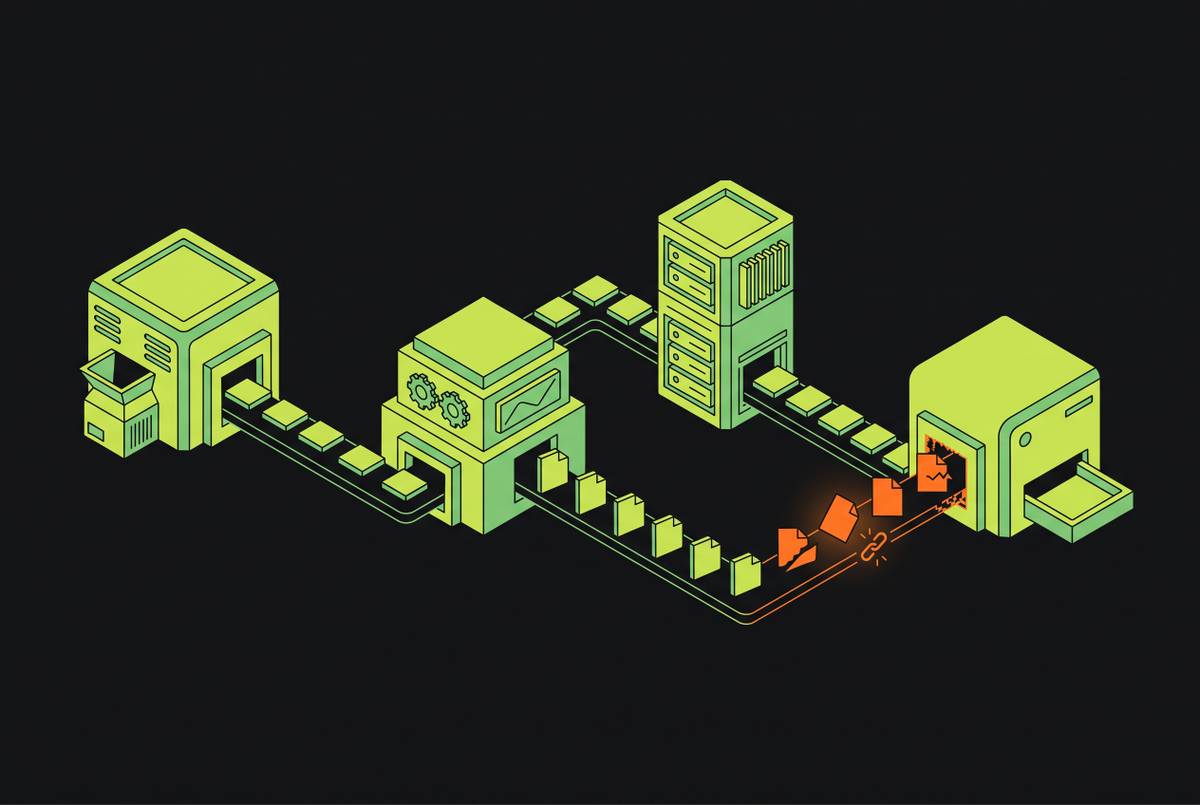
Stack both failures inside one pipeline, researching a market, cross-referencing internal data, drafting a compliance memo, formatting it for an executive, and the seams show fast. Every added step is another chance for context to slip and for an unverified assumption to ride along into the next stage. That is what happens, by design, when one contextual thread has to carry too much weight for too long.
How model fingerprinting and watermarking make single-model output detectable
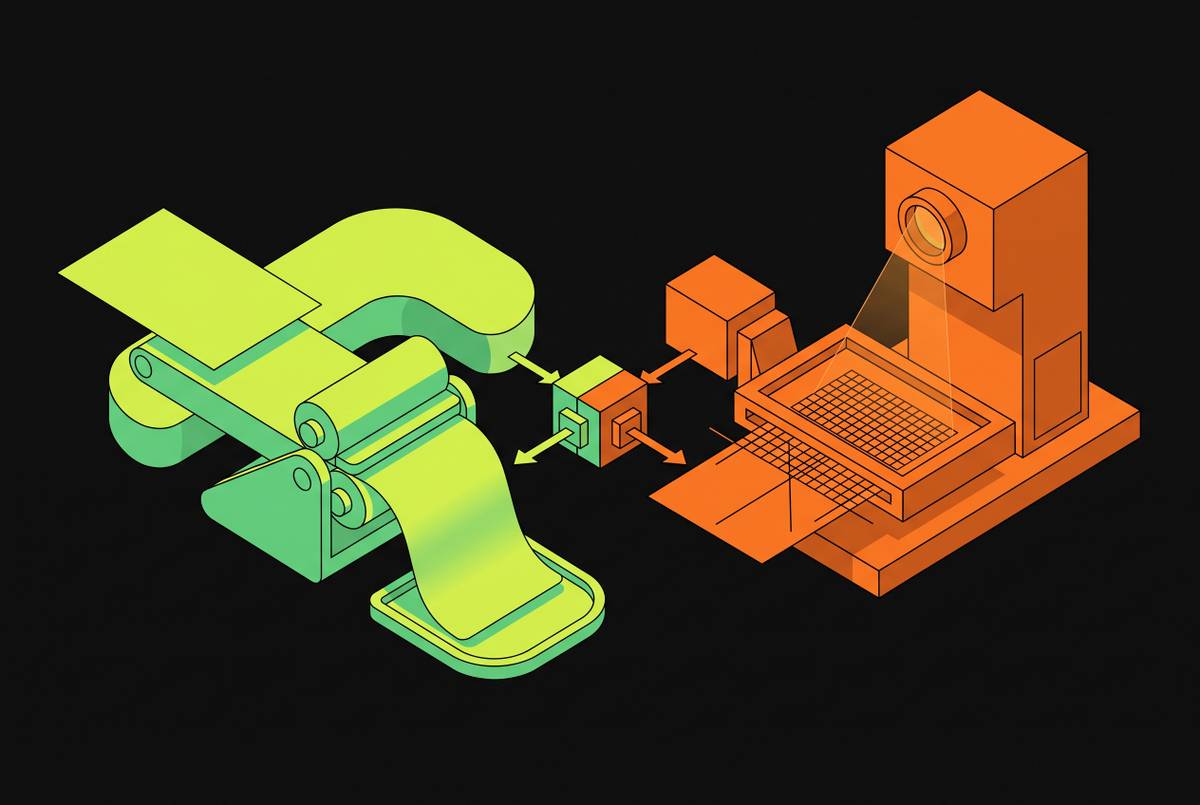
Text from a single model risks more than sounding generic. It risks getting flagged as machine output, and in a growing number of jurisdictions that flag is a legal requirement, not a courtesy. Most detection today runs on watermarking through token biasing: at each generation step, the model gets nudged to slightly favor certain "green list" tokens over statistically equivalent alternatives. A human reader notices nothing. The lean toward green-list tokens still leaves a statistical signature in the output, one a verifier can read once it knows the bias pattern.
No single sentence carries a reliable fingerprint on its own, since the bias is probabilistic and any one word choice could be coincidence. Stacking a few hundred words together, though, makes the coincidence stop looking like coincidence: a genuinely random writer would not keep leaning the same direction, word after word.
This has stopped being a research curiosity and become policy. Anthropic, along with roughly 190 other signatories, signed the EU Code of Practice on Transparency of AI-Generated Content in July 2026, and watermarking now exists specifically to satisfy the EU AI Act https://www.anthropic.com/news/claude-text-watermark. Anthropic has gone further, releasing a detection API in private preview for the organizations that need it under EU law: regulators, law enforcement, fact-checkers, independent researchers. The infrastructure for identifying single-model output at scale is running now, and the teeth on it are only getting sharper.
What evasion research reveals about the geometry of detection
Researchers at UTS, presenting at ELOQUENT 2026, found something sharper than the old line that detectors can be fooled. They found a lopsided failure mode: pushing generated text outside the statistical distribution a detector was trained on breaks that detector reliably, while pulling text toward the same distribution, trying to make it read as more "natural" by the detector's own yardstick, does almost nothing. Detectors are fragile in exactly one direction. They are fragile in exactly one direction.
That asymmetry produced two attack families that beat everything that came before by a wide margin. Cross-decade register shifts and a modernist stream-of-consciousness style both push text out of distribution while keeping it readable, and together they push fool rates up to roughly 50 times higher than prior methods https://arxiv.org/pdf/2607.13565. One tactic, style_pre1923, pushes text toward pre-1923 prose register and hits a 0.50 fool rate against the Macko-replica detector and 0.64 against Macko-LOSO when run on Claude Opus https://arxiv.org/pdf/2607.13565. A detector's blind spot turns out to be a mappable shape, and once it is mapped, it can be walked around on purpose.
Other findings back this up from different angles. SHADE fine-tuning takes a model from a 1.5% surrogate evasion rate to 98.5% with full fine-tuning and a small KL regularization penalty https://arxiv.org/pdf/2609.22221. Evasion, in other words, is a matter of training pressure applied, not some fixed trait a model either has or lacks. Detectors built for one condition also fail to hold under another: fine-tuned encoders tested on the semantic-invariant split of HC3 PLUS drop 12 to 13 points in balanced accuracy once the text passes through translation, summarization, or paraphrasing https://arxiv.org/pdf/2607.29539. A synthesis of 230 scholarly publications and institutional records lays out just how adversarial the relationship between AI writing and AI review has already become https://arxiv.org/pdf/2609.07713. Some methods do hold up: a 2026 ICLR fingerprinting technique reports a 100% detection rate even under fine-tuning, quantization, pruning, sampling variation, and active attempts to defeat it, and a framework called CAMF beats the strongest baseline detector by 2.15 points in macro-F1 on news data, landing at 74.67% https://arxiv.org/html/2505.16723 https://arxiv.org/pdf/2508.11933. What emerges is a boundary that keeps moving. Evasion research is mostly in the business of tracing where that boundary sits this month, not settling where it will sit next month.
The adversarial multi-model architecture as a structural answer
If the failure is structural, one model generating and that same model checking its own work, the fix has to be structural too. Adversarial multi-model architectures split generation and review across separate models holding distinct roles: a generator, at least one reviewer, and sometimes a judge to arbitrate between them. Because the models share no internal state, they cannot quietly agree to wave a weak answer through. There is no echo chamber for a bad draft to hide inside.
TriAdReview, a 2026 paper, offers the clearest empirical test of the idea so far. The architecture pairs a generator with two independent reviewers: one that critiques from an engineering angle (design decisions, over-engineering, needless complexity) and one that critiques from a boundary angle (failure scenarios, security gaps, reliability edge cases). The researchers ran three configurations, a single-model baseline, a dual-model setup with one reviewer, and the full triple-model system, against five benchmark tasks: architecture design, code generation, proposal review, security audit, and requirements analysis. That produced 75 experiments total, five runs per cell.
The baseline scored 23.8 out of 50. The full triple-model system scored 26.2, a 10.1% improvement that held up under a paired t-test at p<0.05 https://arxiv.org/abs/2606.15074. The gains did not spread evenly, and where they concentrated says something real about what adversarial review is actually good for. Security audit improved 27.6%, code generation improved 20.8%, architecture design improved 15.6% https://arxiv.org/abs/2606.15074. A second, independent scorer confirmed the same direction with a smaller effect, 2.7%, which points to moderate agreement between raters rather than a fluke reading.
The architecture opens a cost argument too, and this is the part budget owners should actually care about. Not every step needs a frontier model doing the thinking. Lightweight models can handle routing and extraction, the mechanical sorting and pulling of relevant material, while expensive, high-reasoning models get saved for judgment calls that actually need them. Model-routing built this way reportedly saves 40 to 60% on cost, which turns adversarial review from a quality-only design choice into one with a budget case behind it https://people-search-free.com/blog/best-llm-ai-business-marketing-2026.
Where adversarial review architectures fail
Adversarial review is not a universal upgrade, and the TriAdReview data makes that plain rather than implying it. Requirements analysis degraded by 7.5% under the full triple-model system, a drop traced to structural bias toward simplification https://arxiv.org/abs/2606.15074. That single number may be the most useful one in the whole paper for anyone planning to build a system like this, because it draws a hard line around where the architecture helps and where it actively hurts.
The mechanism is straightforward once you name it. Adversarial reviewers get built to push toward tighter, cleaner, more defensible output, and that instinct is exactly wrong for a task where the goal is listing everything relevant rather than trimming to what looks most defensible. A reviewer optimizing for elegance cuts items that look redundant or marginal, and in a requirements document those "redundant" items are often the entire point of the exercise.
That draws a real line between task types: adversarial review helps one kind and actively harms the other. Adversarial review helps work that rewards challenge-finding: security audits, correctness checks, anything where the value comes from someone actively hunting for what is wrong. It hurts work that rewards comprehensive enumeration: requirements gathering, documentation meant to cover every case rather than the cleanest ones. Softening the reviewer's prompt, telling it to trim less aggressively, eases the degradation somewhat but does not erase it, because the bias sits deeper than prompt wording. It is baked into what an adversarial reviewer is structurally built to optimize for, and no amount of prompt tuning fully undoes that.
Anyone deploying this architecture needs to know which side of that line a task sits on before turning the reviewers loose. Skipping that check causes the system to confidently improve the wrong tasks while quietly degrading the ones that needed breadth instead of polish.
Applying adversarial multi-model design to voice-faithful writing at scale
A model trained on the entire internet writes like the entire internet: fluent, competent, and tonally flat in a specific way a 2024 Stanford NLP benchmark labeled "assistant-speak". The prose is fluent and skillful enough. It just isn't anybody's voice in particular.
Most fixes for this reach for adjectives: "professional yet friendly," "confident but approachable." Those briefs constrain almost nothing, since nearly every brand describes itself with the same handful of words. A description every competitor could equally claim is a wish, not a specification, and no test exists for whether a paragraph satisfies "friendly" the way a measurable pattern can be matched against real text.
Corpus-derived voice swaps the adjective for a measurement. Pull sentence-length rhythm, actual word choices, and hedging habits out of a body of writing already known to be good, and use that extracted pattern as the spec, backed by real examples instead of adjectives. Then run new output through a blind test against the real copy. If a reader, or a reviewer model, can pick out which sample is the genuine article, the draft has not passed.
Corpus size depends on the format. Short-form work, social captions, ad copy, subject lines, generally needs only 5 to 15 genuinely excellent examples to establish the pattern. Long-form work, blog posts, whitepapers, newsletters, needs a lot more raw material, a minimum of around 15,000 words of polished, representative writing, and the selection criterion matters as much as the volume. Choose for voice fidelity, not for whatever happened to perform best on social media. A popular post and a voice-faithful post are not the same thing, and mixing them up trains the corpus toward the wrong target.
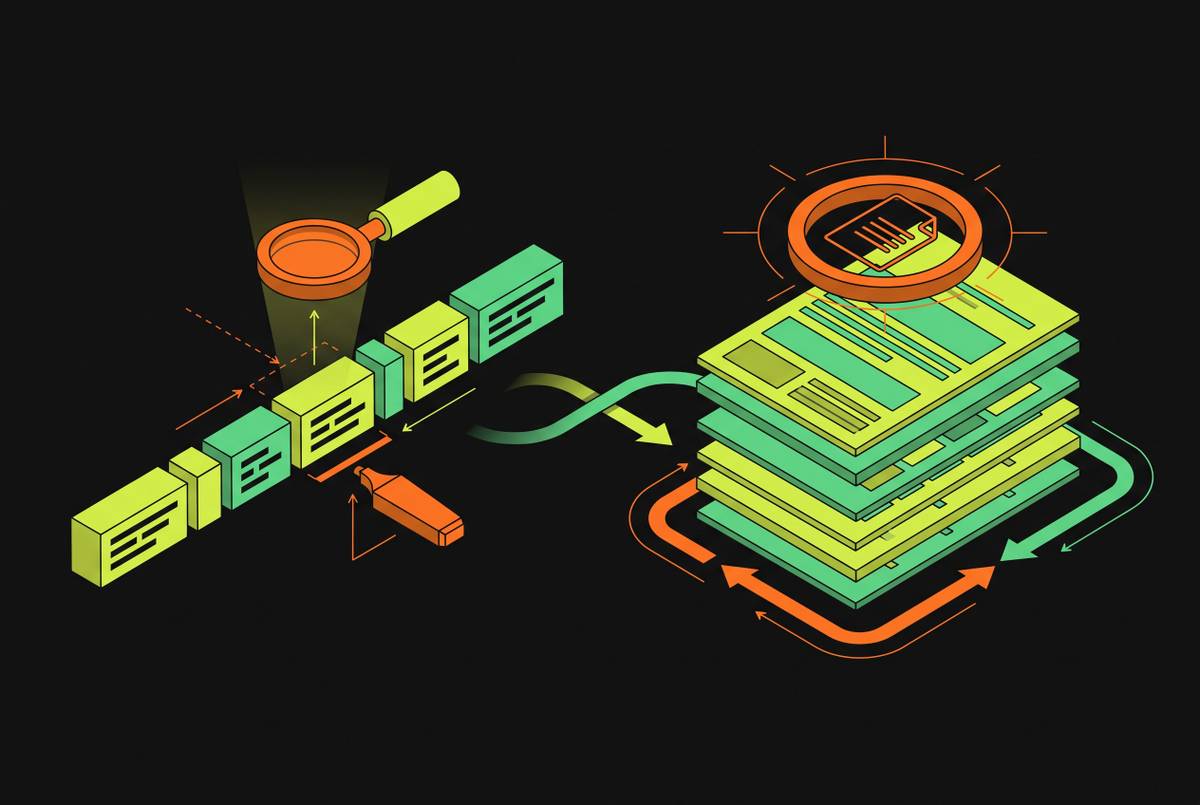
This is where the adversarial architecture earns its keep again. A generator drafts to the extracted spec, a reviewer model checks the draft against the corpus pattern, and only work that survives the check moves forward: the same review discipline that caught security gaps in TriAdReview, aimed now at tone instead of code.
What a production-grade multi-model writing harness looks like
Running several models against each other only works if something coordinates them, and that coordination layer is where the real engineering effort goes. Omnigent, built by Databricks, is the most visible example of what people are calling a meta-harness: a layer sitting above existing tools like Claude Code, Codex, and Pi, keeping sessions, policies, and skills consistent no matter which underlying model happens to be doing the work at any given moment. Running several models inside one shared environment lets state, permissions, and context carry over cleanly between them, instead of starting fresh every time the active model changes.
Quality gates need the same rigor a software team gives its test suite, not a lighter version of it. Adversarial reviewer models can act as automated style enforcement, catching known failure patterns before a human ever opens the draft: overused hedges, stray verbal tics, phrasing that reads off-voice against the corpus baseline. Output clears the gate only once it survives review from the full panel.
None of this belongs stuck behind a chat window. Writing harnesses need to live in the terminal next to the rest of the build tooling, with CLI and API access as the door in. Most AI writing tools shipped as consumer-facing web apps rather than developer infrastructure, and that looks more like an accident of how the category got built early on than a deliberate choice. The architecture described across security audits and code review carries over cleanly to this setting, because the underlying problem, one model grading its own work, is the same problem wearing a different task. A systematic review of 70 open-source LLM agent projects found that 60% adopt the Agent Loop pattern https://github.com/ai-boost/awesome-harness-engineering. The 2025 PAN shared task closed with 112 software submissions and 70 notebook papers, a scale that says the field has stopped treating this as a side question https://arxiv.org/pdf/2602.09147.
Sources
- TriAdReview: Triangular Adversarial Review Architecture for Multi-Model Technical Document Generation
- Overview of PAN 2026: Voight-Kampff Generative AI Detection, Text Watermarking, Multi-Author Writing Style Analysis, Generative Plagiarism Detection, and Reasoning Trajectory Detection
- The Emerging AI Paper-Review Arms Race: Adversarial Co-Evolution in Scholarly Publishing
- UTS at ELOQUENT 2026 Voight-Kampff: structural shifts in AI writing bypass state-of-the-art detectors
- CAMF: Collaborative Adversarial Multi-agent Framework for Machine Generated Text Detection
- arxiv.org
- arxiv.org