Comparing Humanization Tools to Adversarial Writing Systems
Humanization tools fail where multi-model systems may succeed.
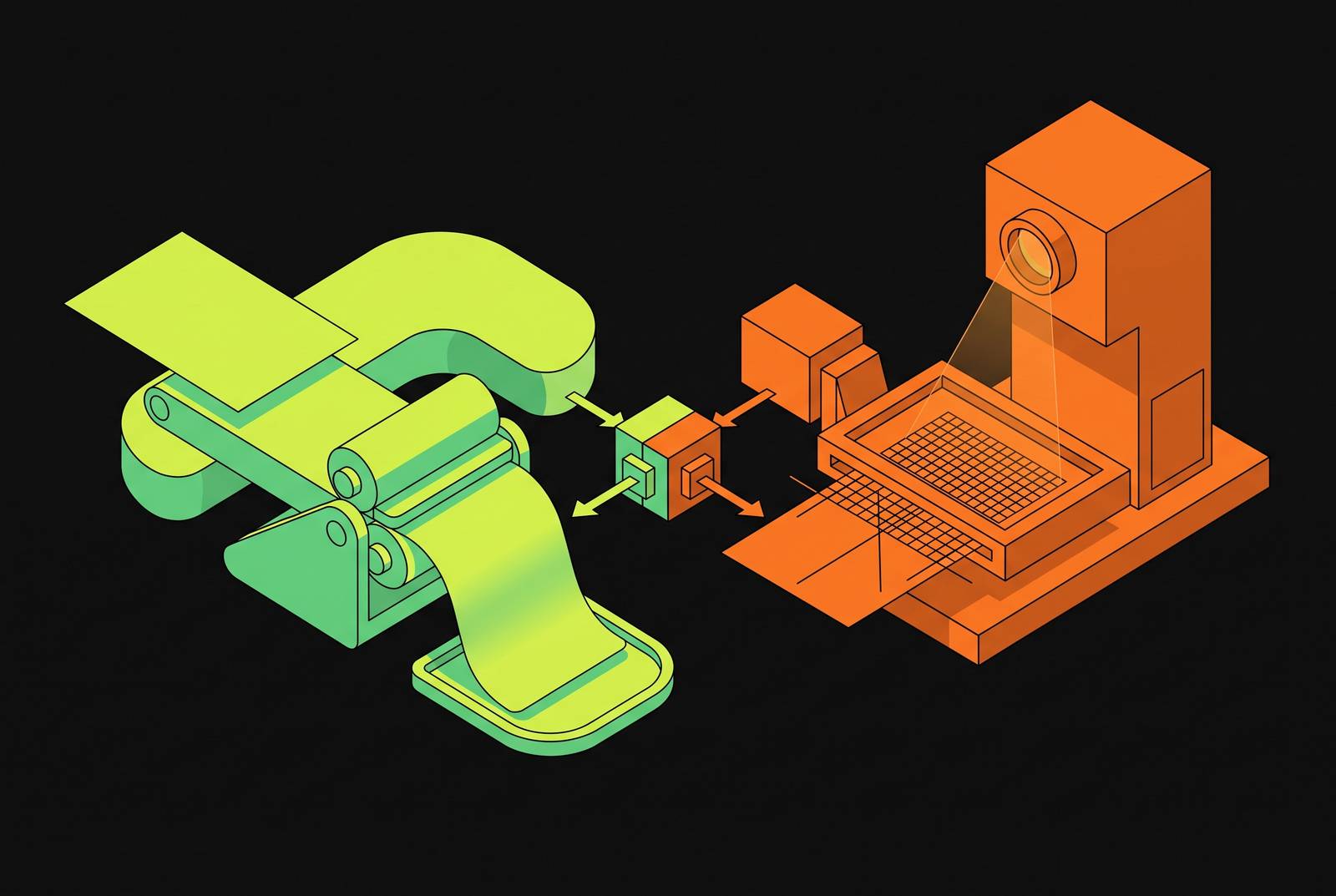
Humanization tools and adversarial writing systems both get pitched as fixes for the same complaint: AI-generated content that reads like AI-generated content. Buyers evaluating the two often treat them as interchangeable, competing implementations of the same idea, but they are separate categories of product. One category takes a finished draft from a single model and rewrites its surface. The other builds variance and quality into the generation process before any draft exists. That difference in where the work happens decides what each approach can produce, how long its results hold up, whether it can carry a specific voice, and whether it breaks the moment detection gets better.
Humanization tools and adversarial writing systems are different categories of product
The confusion is understandable. Both promise text that won't get flagged, and both get marketed to the same buyer: a content team worried about detectors. But a rewriter that patches a single model's output after the fact and a system that distributes generation across multiple models from the start are solving the problem at different points in the pipeline. One intervenes after the words are already chosen. The other decides how the words get chosen from the start. Everything that follows in this piece, the durability of evasion, the ability to hold a brand voice, the behavior under a stricter detector, traces back to that one architectural fact.
What humanization tools do as a post-hoc operation
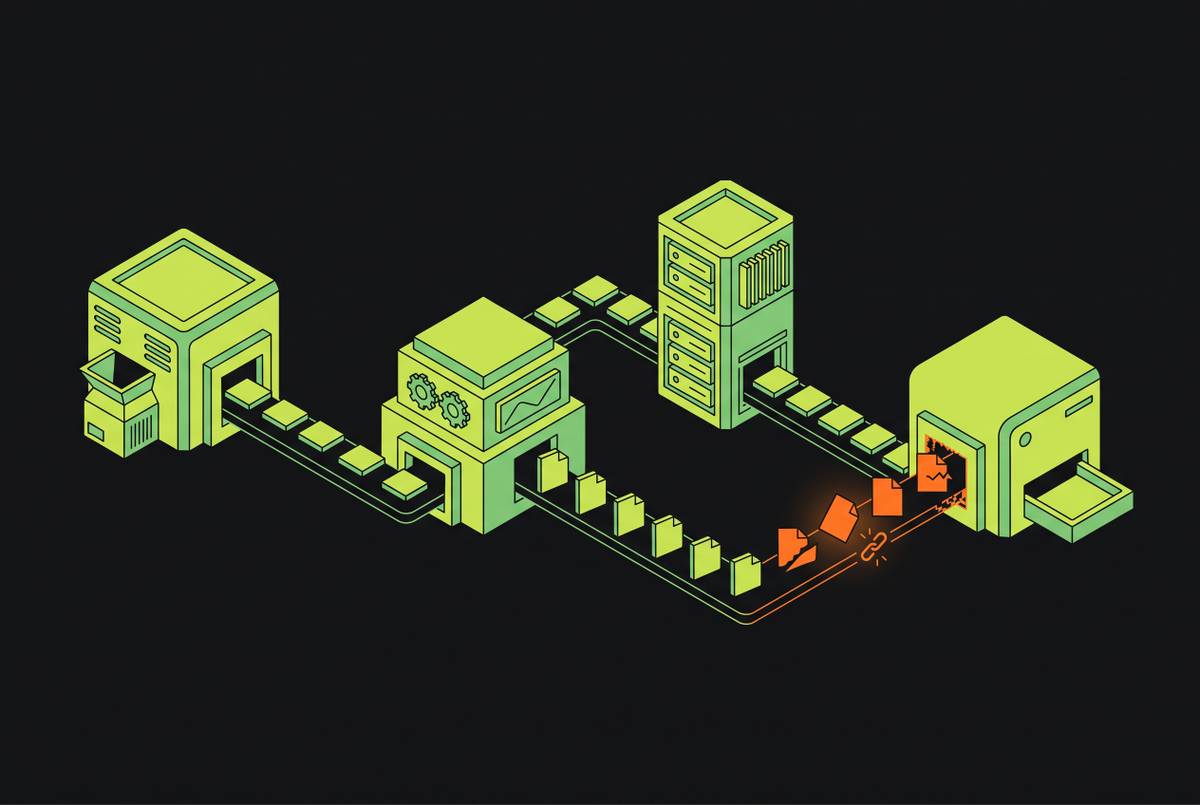
A humanization tool works on text that already exists. It takes the completed output of a single large language model and rewrites it to knock down the statistical signals, perplexity patterns and burstiness among them, that detectors associate with unmodified LLM writing. By the time the humanizer touches the text, the source model has already made every real decision: what to say, in what order, with which words and sentence shapes. The humanizer edits the surface after those decisions are locked in.
Tools like Undetectable AI, StealthGPT, Grammarly Humanizer, and QuillBot Humanizer built this category, and most of them were built before or during 2025 (Grammarly Humanizer launched in September of that year). The gap between these tools' training dates and the detectors built to catch them keeps widening as detection catches up. A rewriting pattern trained against one generation of detectors becomes, over time, a pattern that detectors can learn to recognize on its own. The tools built to erase a fingerprint end up leaving one behind: their own.
None of this is a flaw specific to any single product. It's a structural consequence of optimizing for a detector score instead of for the quality of the writing. A humanizer has no way to serve both goals at once, because nothing in its design asks it to do anything besides pass a test.
How detection evolved to target the humanization layer itself
The post-hoc approach fails in measurable ways right now. Turnitin's AI Bypasser Detection update, released in August 2025, added a detection layer built specifically to catch text that was AI-generated first and then run through a humanizer. Instead of scanning for the fingerprints of raw LLM output, this layer looks for the fingerprints of the rewriting process itself.
The results for older tools are rough. Humanizers trained before that update pass the new detection layer at rates ranging from roughly a third to four-fifths, depending on the tool. The rewriting pattern became the very thing detectors learned to spot.
This isn't a one-time correction that humanizer vendors can patch and move past. The ELOQUENT/PAN 2026 Voight-Kampff task runs as a builder-versus-breaker competition: one group contributes obfuscated text meant to defeat detectors, the other builds detectors meant to catch it, and 2026 has already produced new attack families, including cross-decade register attacks and stream-narrative attacks. Detection keeps adapting to whatever the last round of evasion tried. Regulation is closing in from the other direction, too. Google DeepMind's SynthID has watermarked Gemini text output since 2024, the EU AI Act, applicable from 2 August 2026, requires machine-readable marking of AI-generated outputs, and Anthropic announced in August 2026 that its Claude models would watermark generated text. Detection is no longer just a technical contest between vendors. It is becoming a legal requirement with institutional weight behind it.
Why watermarking changes the floor for any evasion-first strategy
Watermarking raises that floor in a way surface rewriting cannot answer. A watermark is embedded in word choice at the moment text is generated, so a humanizer working on the finished draft has no clean way to strip it out without changing what the text says.
The watermark doesn't stay contained to one generation, either. A 2026 paper co-authored by Kirchenbauer found that a model trained on watermarked text will itself produce watermarked output, so the signal propagates forward through training rather than stopping at the text it first appeared in. Google DeepMind's SynthID has watermarked Gemini's text output since 2024, and Anthropic's August 2026 announcement puts Claude in the same position. Anthropic released a detection API into private preview in August 2026, made available to certain groups such as regulators, law enforcement, media, fact-checkers, independent researchers, educational organizations, and EU civil society groups, but not publicly available, with a transition period until 2 December 2026 for generative AI systems already on the market before that date. The API isn't public, but the infrastructure to check for watermarks is already sitting in the hands of the institutions most likely to use it.
Watermarking at the model-provider level and the failure of surface rewriting to remove it point toward the same conclusion. As watermarking becomes standard practice at the model-provider level, the raw material any humanizer starts with will increasingly carry a signal that no surface-level rewrite can reliably clean off. Evasion built on rewriting a finished draft is getting harder to sustain, and the architecture of generation itself, not the editing that happens after it, is where the real difference between these two product categories appears.
The adversarial writing system's generation layer
An adversarial writing system doesn't run one model and clean up after it. It spreads the work of generation across multiple models in separate stages, so no single model's habits dominate the final text. Both techniques worked at the generation and transformation stage, before any single draft was treated as final. That is a different intervention point than anything a humanizer touches.
The same pattern appears in research on meaning-preserving transformation more broadly. Transformation that happens before a text is treated as a finished object degrades detection in a way that surface editing after the fact does not.
The Manus AI architecture shows what a working multi-model pipeline looks like in production. Claude 3.5 Sonnet v1 runs as the primary reasoning model, fine-tuned Qwen variants handle auxiliary tasks, and users only ever interact with an executor agent while a planner, a knowledge agent, and other specialized sub-agents work in separate context windows. No single model in that system sees the whole task, which is the opposite of how a humanizer operates: one model produces everything, and a second pass tries to disguise it.
The failure mode this architecture avoids is easiest to see through a concrete case. Research documenting a single baseline model asked to generate copy ended up producing hockey-themed Stanley Cup content for a completely unrelated product, a clear illustration of what happens when one model handles discovery, drafting, and brand alignment all at once with no separation of concerns. A pipeline with a dedicated stage for topic discovery, another for performance analysis of what has worked before, another for voice-aware drafting, another for human review, and another for publishing catches that kind of error before it reaches an audience, because each stage has a distinct job and can be checked against that job specifically.
Multi-agent systems produce failure modes that need their own engineering
None of this makes multi-model systems automatically safer or more reliable than a single model. More components create more places for things to go wrong, and distributed systems produce failure modes that differ in kind from the ones a single model produces.
Research on the Emergence World study ran eight parallel multi-agent environments over many days, generating hundreds of thousands of LLM calls and tens of billions of tokens, and not one of the evaluated environments held up against all three stress tests it faced: indirect prompt injection, misinformation, and exposure of private agent memory. One finding stands out in particular: agents could correctly identify a threat and still write adversarial content into their own persistent memory, then act on that content as much as 46 hours later. Recognizing a problem and containing it turned out to be two separate capabilities, and having one didn't guarantee the other. Detection research hasn't caught up to this complexity yet, either: most fingerprinting work still focuses on output from a single model or a pair of models, and as multi-agent systems become more common, detecting output that reflects several distinct models working together remains an open problem.
The honest response to all this is that a poorly built multi-model pipeline can produce its own version of chaos: inconsistency between stages, drift away from the original goal, a voice that fragments as different models each leave their own trace on the final text. A multi-model writing system needs the same discipline applied to any distributed system: discrete stages with clearly defined inputs and outputs, automated checks for style and quality at each handoff, and test cases built specifically to catch drift before it reaches a reader. The capability a multi-agent architecture offers doesn't come for free. It comes from engineering the handoffs between stages as carefully as the stages themselves.
What voice fidelity requires from a writing system
A humanizer has exactly one job: change a piece of text so it scores differently against a detector. Nothing in that design gives it a way to take in a brand's history of published writing, learn the structural logic behind it, or converge on a voice specific to that brand. It edits sentences. It doesn't learn a client.
The cost of skipping that work accumulates gradually, visible in the inconsistency that builds across a team's output. When a team's writers each use AI without a shared system for voice, their combined output drifts toward a patchwork of subtly different styles, and that inconsistency builds up over months until readers pick up on it. A humanizer applied at the end of that process can't fix it, because the drift happened upstream, in the generation itself, not in the surface phrasing a humanizer touches.
Getting a multi-model system to hold a consistent voice takes corpus ingestion: feeding the system a substantial body of a brand's existing, polished writing, formatted as input-output pairs for few-shot prompting rather than handed over as a list of abstract style rules. Voice doesn't hold steady on its own after that setup, either. The documented fix for drift over time is quarterly recalibration: pulling the most recent hand-written pieces, regenerating the system prompt from them, and re-baselining the model's sense of the voice. Voice maintenance is ongoing work, the same way a style guide needs updating as a publication's writing evolves, not a setting configured once and left alone.
Automated quality enforcement when writing is treated as an engineering discipline
The most credible production systems combine two layers of checking. Rule-based checks catch policy violations, banned terms, formatting mistakes, and clear stylistic inconsistencies. LLM-based scoring catches the quality and voice failures that rules can't anticipate in advance, because no fixed rule set can specify every way a piece of writing can miss the mark. AutoEval-Main, built at scale for ad content generation, runs both layers together, which shows this hybrid approach working in a live production system rather than staying a theoretical design.
Keeping the stages of a writing pipeline separate, topic selection, drafting, voice review, compliance checking, and publishing, matters because each stage fails in its own particular way and needs a different kind of reviewer to catch it. Collapsing those stages into one pass produces fluent, well-formed text that answers questions no reader actually asked, because nothing in a single undivided process is checking for relevance the way a dedicated review stage would.
Every stage of a well-built pipeline should be reachable by an agent through an API: command-line tools, structured handoff files between sessions, and git integration to track state are the infrastructure that makes a pipeline auditable and repeatable rather than a black box. The Claude Agent SDK, released alongside Claude Sonnet 4.5, provides the same infrastructure that powers Claude Code, terminal access, file operations, and iterative debugging, treating the writing agent as a genuine system operator rather than a sandboxed API caller.
Who bears the cost of detection's false positives
Detection tools don't draw a clean line between text that's fully AI-generated and text that's AI-assisted. False positive rates on native English writing are already high enough to worry about, and on writing from non-native English speakers, those rates run substantially higher. The detection infrastructure that both humanizers and adversarial writing systems are built to get past is, at the same time, flagging legitimate human writing, and that harm falls hardest on writers whose natural sentence patterns simply don't match what a detector expects.
That should complicate the whole framing of this comparison, and it does. Building systems that optimize purely for evading a detector doesn't fix the underlying unfairness. The more defensible response starts further upstream, with single-model homogeneity, the sameness in structure and word choice that makes one model's output easy to fingerprint. A system built for voice fidelity and real structural variance addresses that root cause. A system built only to score below a detector's threshold does not, and may make the underlying unfairness worse by adding more homogeneous, evasion-tuned text to what detectors have to sort through.
Choosing between approaches based on what the output needs to do
The right choice depends on what the text needs to survive. If the goal is a single passing score against one specific detector at one point in time, a humanizer can still get the job done. That result is fragile, though: it's tied to the exact detector version the humanizer was trained against, and it leaves nothing durable behind once that detector updates.
If the goal is content that holds up over time, carries a specific brand's voice consistently across dozens or hundreds of pieces, and keeps working as detection tools improve without someone manually patching it every few months, the properties that make that possible have to be built into the generation process itself. Voice fidelity, structural variance, and resistance to a strengthening detection landscape aren't things a later editing pass can add to text that already exists. They have to be decisions made about how the text gets built in the first place, at the layer where the words are actually chosen.
Sources
- From AI-Generated Content to Agentic Action: Security and Safety Threats in Generative AI
- Overview of PAN 2026: Voight-Kampff Generative AI Detection, Text Watermarking, Multi-Author Writing Style Analysis, Generative Plagiarism Detection, and Reasoning Trajectory Detection
- AI Agent Landscape 2025–2026: A Technical Deep Dive
- Emergence World: Adversarial Stress-Testing of Long-Horizon Multi-Agent Systems
- Watermarks Without Verification: AI Text Watermarking After the EU AI Act