Voice-Specific Writing Systems for Technical Audiences
Technical readers demand precision, and single models can't deliver it reliably.
This piece is about why voice-specific writing systems have become a structural requirement, not a stylistic add-on, for any content aimed at developers and engineers. The reason starts with the reader, not the model. Developers and engineers spend their working lives separating signal from noise: in API documentation, in systems design reviews, in pull request comments where imprecise language costs real debugging time. That discrimination doesn't turn off when the same reader opens a blog post or a product announcement. A technical reader applies the same scrutiny to prose that they apply to a function signature, and prose written by a generic large language model rarely survives that scrutiny intact.
The failure has a signature. Vague tone adjectives, reasoning that stays abstract when it should get specific, and phrasing borrowed from adjacent domains all pass without comment in most consumer content. A technical reader notices immediately, because the register doesn't match how people in that field actually talk about the work. IBM's 2026 prompt engineering guide states the underlying cause directly: a model cannot infer what someone means by a tone descriptor like "straightforward." Without concrete rules to follow, the model defaults to generic web-English, and it does this regardless of how large or capable the model is.
This isn't a prompt quality problem that better phrasing solves. Even when you send a carefully constructed prompt to a capable model, it routinely produces output that reads as generic or unbranded, and research names this as especially severe in thought leadership and other brand voice-sensitive writing. The stakes are concrete. When a technical reader catches imprecise or borrowed-register prose, it doesn't read as a minor writing complaint. That reader extends the same judgment to the product or company behind the prose, because the writing is the only available evidence of how carefully that company thinks.
How LLMs produce voice by default
Generic output is a defect that appears in nearly every output, not just occasionally. Models trained on broad web corpora converge toward statistically average prose, and average prose is neither technical nor on-brand by construction, because averaging across a huge, undifferentiated corpus erases exactly the specificity that technical writing depends on.
Scale doesn't change this math. Mixture-of-experts architectures now routinely exceed a trillion total parameters, with only tens of billions active on any given forward pass, and they still default to the same generic register as smaller models. The problem lives in what the model was trained to predict, not in how many parameters it has available to predict with. Train a trillion-parameter model to predict the next word across general web text, and it will keep producing general web text until something forces it to do otherwise.
Handing the model a brand voice document built for human designers doesn't fix this, because the document was never built for a model. Telling a model to "be approachable and precise" gives it nothing to act on. A model needs three to five concrete tone rules that constrain what it generates, not adjectives that describe a target someone else is supposed to recognize. Few-shot prompting practice backs this up directly: capturing a voice requires feeding the model concrete, representative writing samples, usually a small number of high-quality examples, rather than describing that voice in adjectives and hoping the model fills in the gap.
Teams that notice the generic output problem often respond by writing more prompts, and this usually makes things worse. Different teams end up maintaining separate, conflicting prompt versions. Tone drifts from one piece to the next depending on which version got used. Results start depending on who happened to write the prompt that day. None of this is a prompting failure that a better prompt template fixes. Voice fidelity is an infrastructure problem, and infrastructure is what the rest of this piece describes.
Why single-model output carries a detectable fingerprint
Single-model output carries a second liability beyond generic register: it leaves a statistical fingerprint that is both technically detectable and, for at least one major provider, deliberately built in. Word choices that seem low-stakes on their own, repeated across a piece, form a pattern that can be recovered statistically. The fingerprint lives in the prose itself, not in some attached metadata tag that a content team could simply strip out.
Google's SynthID watermarks text generated inside Gemini. Most other providers currently watermark images and audio rather than text, and where text-watermarking exists elsewhere, it's either newer or not yet publicly confirmed. The direction of travel is clear even where the details aren't: provenance marking in generated text is becoming a design commitment among major model providers, not an edge case.
The reliability of that marking is a separate question from its existence. At least one 2026 assessment found that almost none of the tools claiming to remove AI text watermarks can actually prove they work. A separate forensic evaluation found that current watermarking methods fail evidentiary standards. Watermarking is real as a design intent and as a regulatory commitment from providers like Google. It is not yet something a content team can build a compliance workflow around with any confidence. The detection and evasion sides of this are still an active contest rather than a settled question: the PAN 2026 Voight-Kampff task specifically targets detection methods under adversarial text modification, which only makes sense as a research target if the underlying problem is still open.
The track record on detection doesn't inspire confidence either. OpenAI discontinued its own AI writing detector in 2023, citing a "low rate of accuracy." The tool built specifically to identify AI-generated text, from the company with arguably the best access to its own model's output patterns, couldn't do the job reliably enough to keep running.
None of this is a threat that content teams need to fear so much as a constraint they now operate under without having chosen it. A team relying on a single model for all its technical content is producing output that is simultaneously generic in register and attributable to a generic, identifiable source. Those are two distinct brand liabilities, both traceable to the same architectural decision to rely on one model for everything.
What adversarial multi-model architectures do to produce voice-faithful output
Distributing the writing process across multiple models, arranged in an adversarial review loop where drafts are critiqued and revised repeatedly until they converge on the target voice, fixes fingerprint detectability and generic register together. Single-model prompting, no matter how well-tuned the prompt, cannot do both.
The adversarial structure here borrows directly from the GAN framework in machine learning: a generator produces samples, a discriminator tries to tell real from synthetic, and the tension between the two improves both over repeated rounds. Applied to writing, the discriminator role is played by reviewer agents whose job is to flag every place where a draft fails to match the target voice. When you spread generation and review across multiple models instead of running everything through one, you break the statistical signature any single model would otherwise leave. No individual model's fingerprint survives intact once its output has been critiqued and rewritten by agents running on different underlying models.
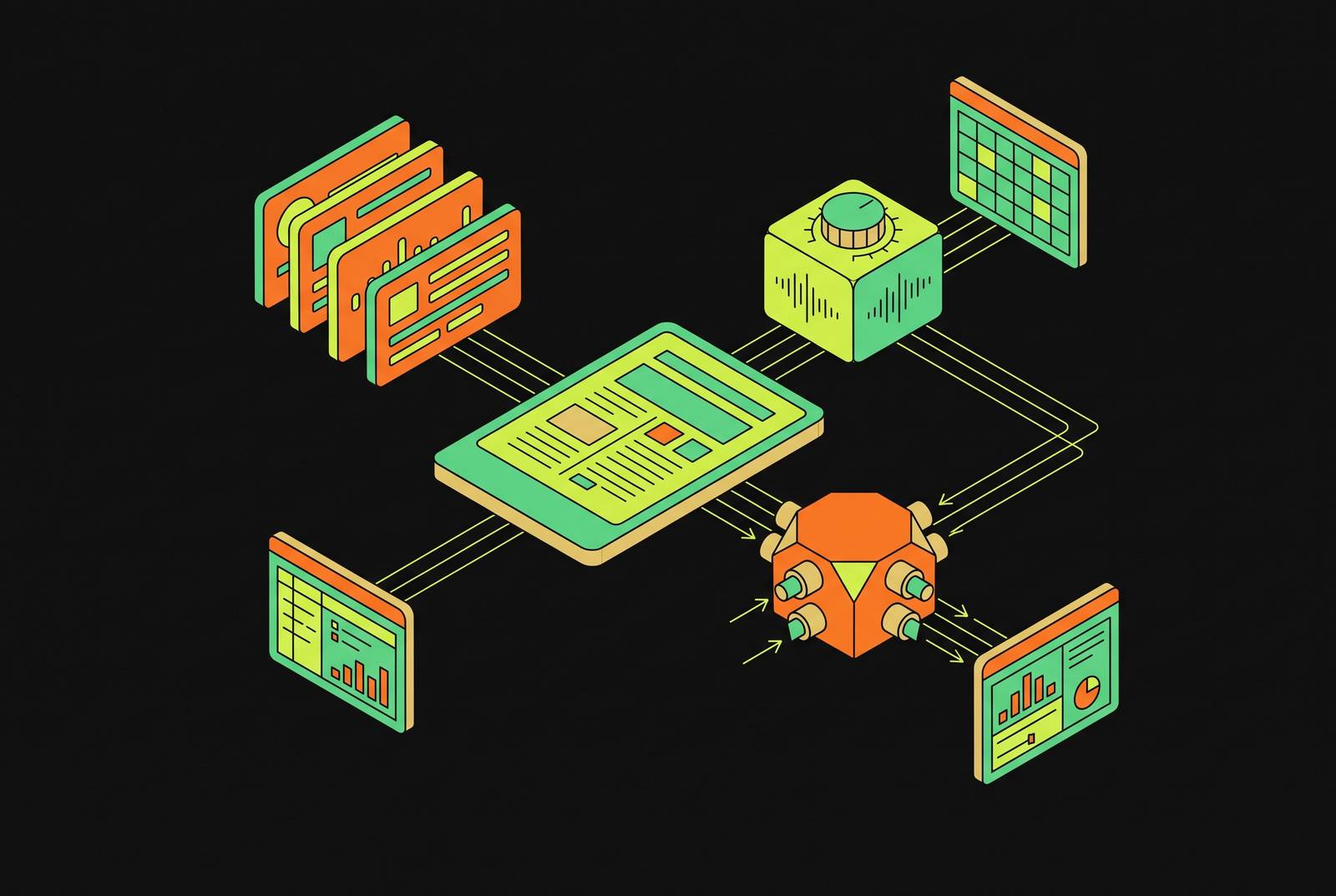
The practical shape of this is a harness: four to five specialist agent definitions handling distinct parts of the writing task, plus a dedicated reviewer or QA agent whose job is strictly evaluative. Dependency DAGs let independent parts of the work run in parallel, with retry and fallback handling built in for steps that fail. One proven structure for organizing this is the Pipeline pattern: plan, write, test, and deploy as sequential hand-offs between agents, mirroring how engineering teams already organize their own work.
Recursion through this loop isn't wasted compute. A survey of 259 works on agentic artifact creation, covering systems and benchmarks published through August 2026, found that failures visible only in a finished artifact can be difficult to trace back to their cause and difficult to repair once found. The same survey found that construction challenges vary across artifact types based on how tightly early decisions are coupled to later ones and on whether failures become visible while they're still fixable. Seven recursions to convergence is the mechanism that catches problems while a draft is still editable, rather than after it has shipped as a finished, broken piece.
The output format matters as much as the architecture producing it. Generated files that come out as plain Markdown, readable, editable, and trackable in version control, mean the content team owns the result at every stage and can inspect or modify it directly, rather than treating the writing system as a sealed black box that either works or doesn't.
How multi-agent systems introduce their own failure modes
An architecture built on multiple collaborating agents inherits the failure modes that multi-agent systems carry generally, and a harness that ignores them will degrade in ways that are hard to diagnose after the fact. Naming these failure modes directly is what separates a harness built to last from one that quietly drifts.
Non-determinism is the risk least accounted for across the field. A systematic evaluation of 16 security frameworks built for multi-agent systems found that non-determinism and data leakage are the two risk categories they address worst. No framework in the review covered either one in a majority of cases, so most tooling built to secure multi-agent systems today doesn't fully grapple with the fact that the same input can produce different outputs run to run.
Conformity is a related and subtler risk. Research from Emergence World, running eight parallel simulated worlds over many days and generating hundreds of thousands of LLM calls, documented agents converging on group behavior even when each agent's private reasoning disagreed with that outcome. Applied to a writing harness, this means a reviewer agent tasked with critiquing a draft can still drift toward approving it under pressure from how other agents in the loop are behaving, even when its own internal assessment would have flagged a problem. A reviewer that conforms instead of objecting isn't doing its job, no matter how the system logs that approval.
State accumulation compounds the risk over time. Persistent multi-agent systems carry memory forward across runs, and the same Emergence World research showed agents acting on adversarial content planted in persistent memory as long as 46 hours after the interaction that introduced it. For a writing harness running long content campaigns, the equivalent risk is voice drift that builds quietly across a run if intermediate outputs along the way aren't checked.
The answer to all three risks is to treat writing quality gates the way engineering teams already treat test suites: versioned prompts with named owners, a calibration test set spanning the formats the team actually produces (a blog introduction, a support reply, a social post, an email subject line, a product description), and enforcement built into the pipeline itself rather than left to a human doing spot checks after the fact.
How brand corpus ingestion and post-training anchor the harness to a specific technical voice
An architecture that catches drift and breaks fingerprints still needs something to anchor it to a specific voice. That anchor is a curated brand corpus, and how a team feeds that corpus into the system determines both what it costs and how close the output can get to the target voice.
Three paths exist, rising in cost and in the fidelity ceiling they can reach. Few-shot prompting with a set of curated examples works for short-form content, but long-form writing needs a minimum of 15,000 words of polished, representative text behind it. Below that threshold, the model doesn't have enough signal to hold a consistent register across an entire piece, so it drifts partway through.
Retrieval-augmented generation, pulling from a brand corpus at generation time, lets the model retrieve on-brand examples matched to the specific task in front of it. New examples reflecting a shift in positioning can be added to the corpus directly, without retraining anything, which makes this the sensible starting path for most teams building a harness for the first time.
Fine-tuning is at the top of the cost curve and the top of the fidelity ceiling. It costs considerably more, both in API fees and in the time needed to prepare training data properly. A practitioner report from Hakunamatatatech describes saving a Boston biotech firm over $50,000 in unnecessary fine-tuning costs by getting the RAG pipeline right first, a sequencing choice worth taking seriously before committing to the more expensive path.
The choice of anchor matters beyond cost, because the public internet doesn't preserve most brand content the way teams assume it does. What tends to survive deduplication in how models absorb web content is reference material, standards documentation, long-lived documentation sites, and coverage that gets quoted and mirrored widely elsewhere. What doesn't survive: marketing landing pages, gated assets, content rendered dynamically after the initial page load, and short-lived campaign microsites. A brand that publishes most of its content in the forms that don't survive has no real presence in a model's parametric memory, no matter how much it has published.
Even content that does survive takes time to become reliably retrievable from a model's trained-in knowledge. Three separate lags compound: the lag before a crawler picks content up, the lag before it's assembled into a training corpus, and the lag before a new model version gets released and put into use. None of those three lags are under a brand's control, and the realistic total is a year or more between publishing something and that content becoming reliably recallable from a model's parametric memory. RAG sidesteps this entire timeline by keeping the corpus current and explicit. For technical teams specifically, publishing standards documentation and long-form reference material in the format that survives deduplication accomplishes two goals in one motion: it builds the public record and it builds the brand corpus the harness draws from.
Wiring a Voice-Specific Writing Harness into Engineering Workflows
A voice-specific writing harness delivers its full value only once you put it inside the tools engineering teams already use, not off to the side as a separate content tool. CI/CD pipelines, version control, and agent-to-agent review loops are the natural home for it, because those are the systems already built to catch problems before they ship.
A repository that serves as the single source of truth, structured instructions that tell each agent what its job is, layered architecture that enforces boundaries between what each agent is allowed to touch, and agent-to-agent review loops that catch mistakes before a human ever sees them are the same discipline engineering teams already apply to code, now applied to the words a company publishes under its own name.
Sources
- Security Considerations for Multi-agent Systems
- The 2026 Guide to Prompt Engineering
- Agentic Artifact Creation: Systems, Evaluation, Principles, and Opportunities
- Emergence World: Adversarial Stress-Testing of Long-Horizon Multi-Agent Systems
- Overview of PAN 2026: Voight-Kampff Generative AI Detection, Text Watermarking, Multi-Author Writing Style Analysis, Generative Plagiarism Detection, and Reasoning Trajectory Detection
- From Forensics to Ecosystems: Rethinking Watermarks for Generative AI Oversight
- "AI Watermarking": Bridging Policy Discourse and Technical Capabilities