CLI Tools for Content Production in Developer Workflows
Orchestrate content production in the terminal with multi-model checks and voice enforcement.
Content production in developer workflows belongs in the terminal because writing at scale needs composable stages, automated checks, and traceable releases. CLI tools supply that foundation, but drafting alone is not infrastructure. A production system also needs model orchestration, generation-time voice enforcement, and quality gates that make human review a publishing decision.
Why the terminal became the right place to build content infrastructure
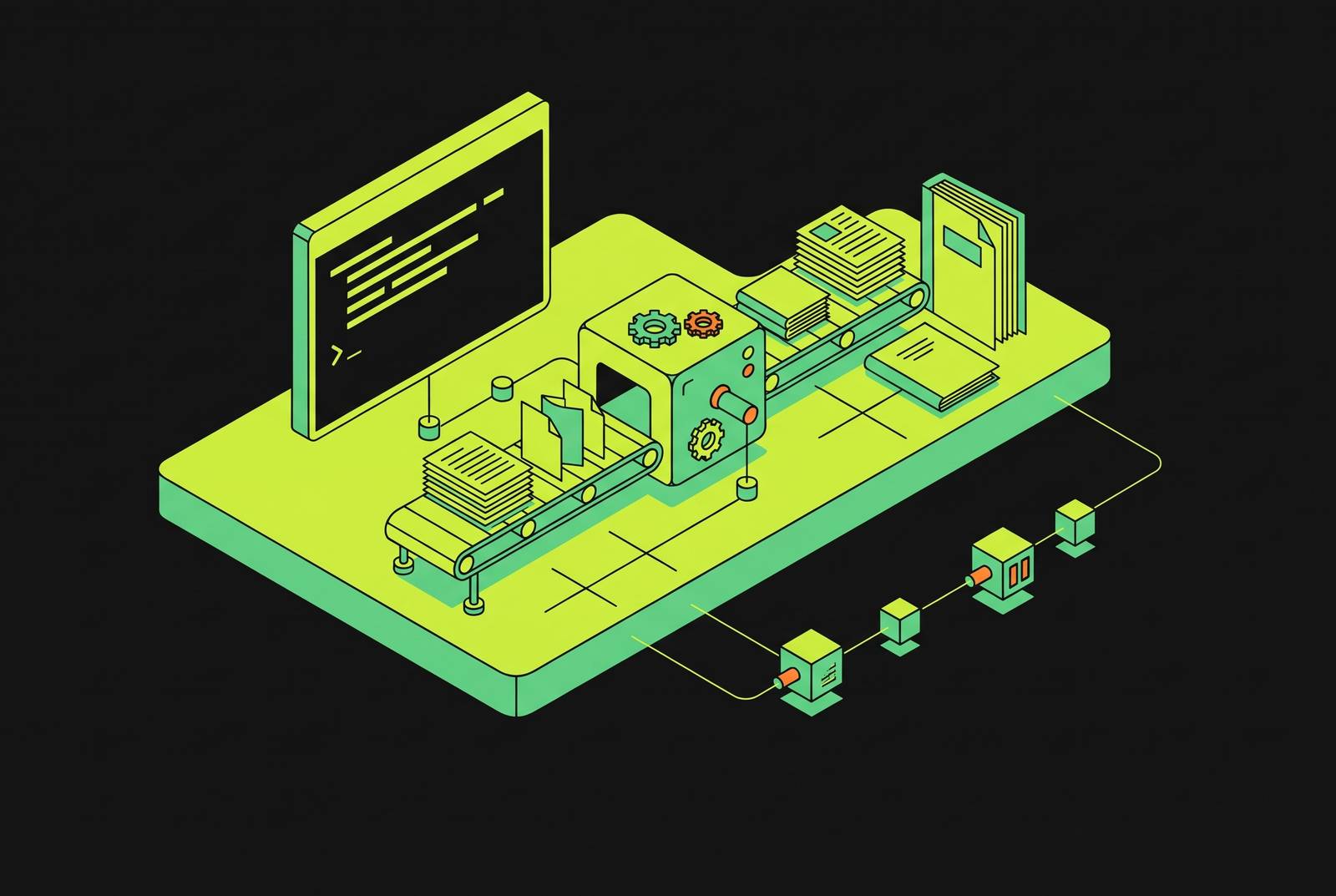
A terminal-native tool can accept a brief, return structured text, and pass that output to version control, a linter, a style-check harness, or a CMS API. The handoff is part of the program. An editor-centered workflow is built around the editing session, so people have to move work between stages that a terminal pipeline can connect directly.
Agents can plan work, edit files, run tests, inspect failures, and continue without someone approving every intermediate operation. Anthropic shipped dynamic workflow support in Claude Code with Claude Opus 4.8 in May 2026, so parallel subagents could work on different components before their work was checked against a test suite. That orchestration pattern applies to content as well as code. Sections can be drafted separately, but the assembled piece still has to pass checks as a whole.
What makes a CLI tool genuinely useful for content work versus code work
A capable code agent is not automatically a capable writing system. Refactoring and test generation have different acceptance criteria from voice, rhythm, terminology, and editorial structure. Tests tell code agents when their work has passed. Content tools need an equivalent contract, including style rules, voice checks, and schema validation, rather than treating the presence of a completed draft as proof of success.
Stdin/stdout composability lets text enter one stage and structured text leave for the next, while headless execution lets the same operation run in CI/CD without interactive prompts. Model flexibility is a separate requirement because drafting, critique, and revision need not use the same provider.
Voice enforcement must also happen during generation. A tool that writes prose but leaves a human to fix brand drift is still a drafting assistant, even if its command-line interface is excellent. Reusable task patterns provide another useful criterion, giving summarization, extraction, and essay generation a defined shape across inputs.
The CLI tools that actually serve content production workflows in 2026
Content production spans agentic editing, pattern-based processing, multi-model routing, and orchestration. A useful stack combines at least two of those functions rather than expecting one interface to supply the whole production system.
Claude Code works well for content workflows that have many steps. Its dynamic workflows can have subagents draft sections in parallel and check the joined output against a style rule suite before committing it. Plans start at $20/month, or $17/month billed annually. The agent provides orchestration, but the content team still needs to define the rules that make its verification meaningful.
Codex CLI is OpenAI’s open-source terminal agent with sandboxed execution. At $20/seat/month, it is a strong fit for teams already using the OpenAI model stack. Its contribution is agentic work inside a controlled execution environment. That capability does not by itself supply the voice checks that distinguish a content pipeline from a general-purpose agent workflow.
Aider is a free, open-source Python CLI with git-native editing and multi-model support. Aider’s git integration commits each change with a descriptive message, making the log an audit trail of AI-touched edits. Different writing passes can therefore use different providers. OpenCode serves teams for which that provider flexibility is non-negotiable, offering a free, open-source CLI built around multi-model operation without single-provider lock-in.
Fabric, Daniel Miessler’s open-source AI CLI, supplies reusable patterns such as summarize, extract_wisdom, and write_essay. Text piped in comes out as structured output shaped for the chosen task. LLM, Simon Willison’s lightweight CLI, is suited to quick text transformations inside a larger pipeline. AIChat adds terminal-native multi-model chat and scripting with roles and sessions, which helps when the same parameterized prompt structure needs to run across many inputs.
Qodo Command supplies declarative orchestration through .toml agent configurations. Its --ci flag and JSON output support pipeline execution, while agents can also be exposed as HTTP endpoints or MCP servers. The --model flag supports model selection, including Claude and GPT-4. Commands such as qodo review --pr=123 and qodo test --path=src/ show its code-oriented foundation. To use that machinery for content, teams must add writing checks that spell out their editorial requirements instead of assuming the code-review configuration already covers them.
Why single-model CLI output fails as content infrastructure, even when the CLI itself works perfectly
A reliable CLI can still deliver unreliable brand voice. The transport may work, the schema may validate, and every file operation may succeed while the prose retains a model’s recognizable habits. General-purpose models vary across inputs but remain stylistically recognizable in aggregate. Because of that combination, relying on a single model creates a problem in how the system is built that a more detailed prompt cannot reliably fix.
The gap lies between what the model says and how it says it. Accurate, polished phrasing can still be generic because tone, rhythm, vocabulary, and specificity lack an enforcement mechanism. Scale exposes the pattern across many pieces. A pipeline that checks only factual coverage or document structure can therefore accept output that repeatedly misses the intended voice.
Watermarking introduces a distinct provenance concern, separate from stylistic resemblance. Some systems embed signals through word choices during generation. The 2024 EU Artificial Intelligence Act’s watermarking provision in Article 50 became applicable on 2 August 2026. These signals raise compliance and brand-authenticity questions, but they are not interchangeable with a reader recognizing familiar model phrasing.
Google announced an expanded SynthID rollout in May 2026. Anthropic announced in August 2026 that Claude models launched on or after August 2, 2026 would watermark output, with older models following during a transition period. Its detection API entered private preview in September 2026 exclusively for specified institutional groups. OpenAI announced textGrain on October 5, 2026, initially making watermarking the EU default with a global API opt-in and detection access for researchers and expert organizations.
LoRA SFT on a team’s corpus can target tone and output schema, yet requires weeks of setup and significant per-example cost on frontier model platforms. A human or second model still has to check for consistency, which adds latency and review work. That validation needs to be part of generation, before the draft is complete.
How adversarial multi-model architectures fix what single-model pipelines cannot
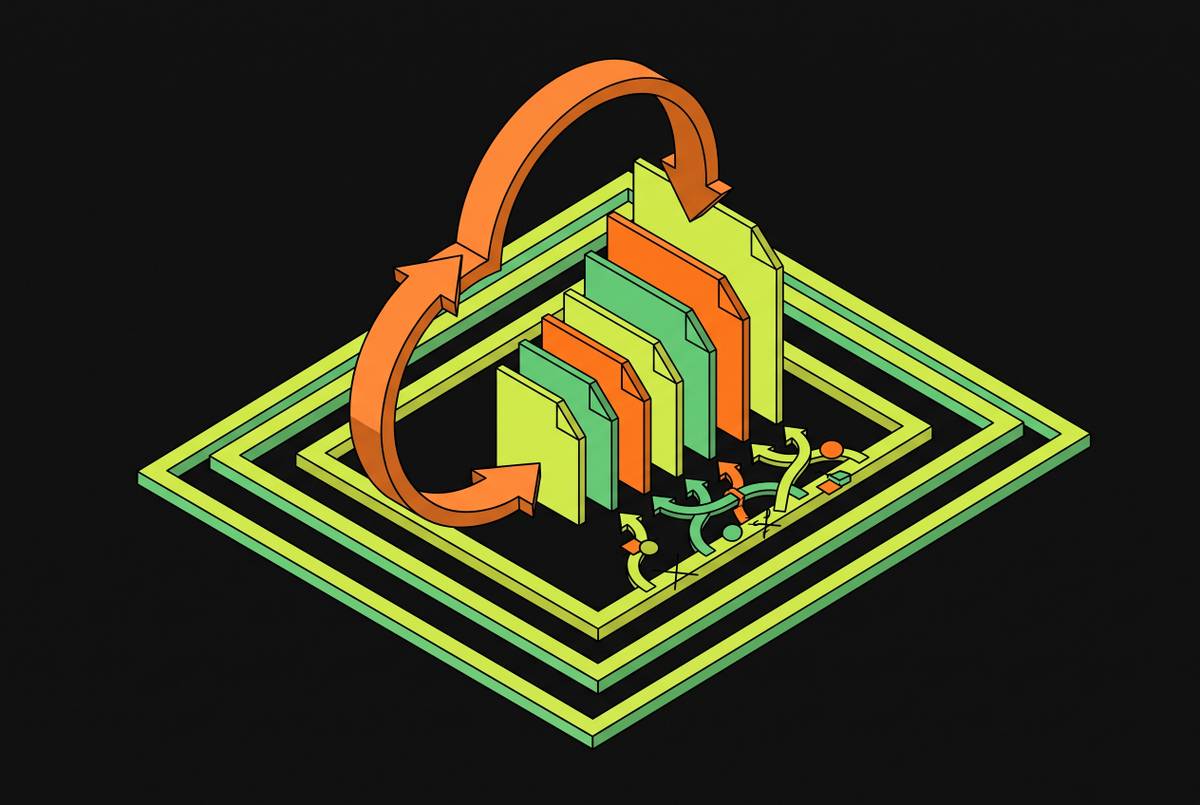
Adversarial generation separates drafting from the authority to accept a draft. A generator proposes text, a critic challenges it, and a reflector or voting mechanism adjudicates feedback before revision. The LLM-GAN architecture uses separate generator and detector model instances that take turns at generation and detection and update their strategies based on feedback. The disagreement has a defined operational purpose. It changes what reaches the output stage instead of just adding comments to a draft that has already been accepted.
For content production, an orchestrator can plan the piece and delegate sections to specialist subagents. A verification pass then checks the combined output against style rules, and it can go to the CMS only if it passes. This reduces dependence on one model’s stylistic defaults. It should not, however, be treated as proof that multi-model revision eliminates every watermark or removes provenance obligations, because editorial convergence and watermark detection are different tests.
Multiple agents also create another trust boundary. Once an agent accepts adversarial content, later agents can receive it as trusted input, allowing the problem to propagate through the pipeline. Boundary verification explicitly validates data crossing between agents to address content injection, agent impersonation, and memory poisoning.
A writing kernel exposed through a CLI or API gives this architecture a practical integration point. The pipeline submits a brief and receives output that has already passed through drafting, critique, and revision. The council performs the intermediate review work. People can then judge the work at release without having to step in at every handoff.
Writing quality gates in the terminal: treating style enforcement like a test suite
Adversarial review needs explicit acceptance rules to become an enforceable production process. Tone, terminology, prohibited phrases, and required structure belong in the writing kernel or verification agent, where failures can be caught before output leaves the pipeline. Style is therefore a release condition. It is not an optional polish pass after the system has declared success.
Documentation automation already provides the operational pattern. Pipelines can regenerate reference documentation, flag material likely to need review after code changes, run quality checks, and draft release notes from structured changes. Qodo’s CI execution and JSON output make agent-run checks compatible with that model. Its declarative configuration can control content checks if those checks spell out the editorial behavior they test.
Writing tests need to name their inputs and the properties they expect. Those properties can include voice, structure, banned patterns, terminology, and schema, giving the pipeline a defined basis for blocking publication. For a technical brand voice that excludes them, “let's delve,” “rich tapestry,” and “pivotal” are test failures. A regexp can catch a known phrase, while a critic model can check how well the text follows the wider set of style rules. Neither check should be confused with proof that every editorial defect has been found.
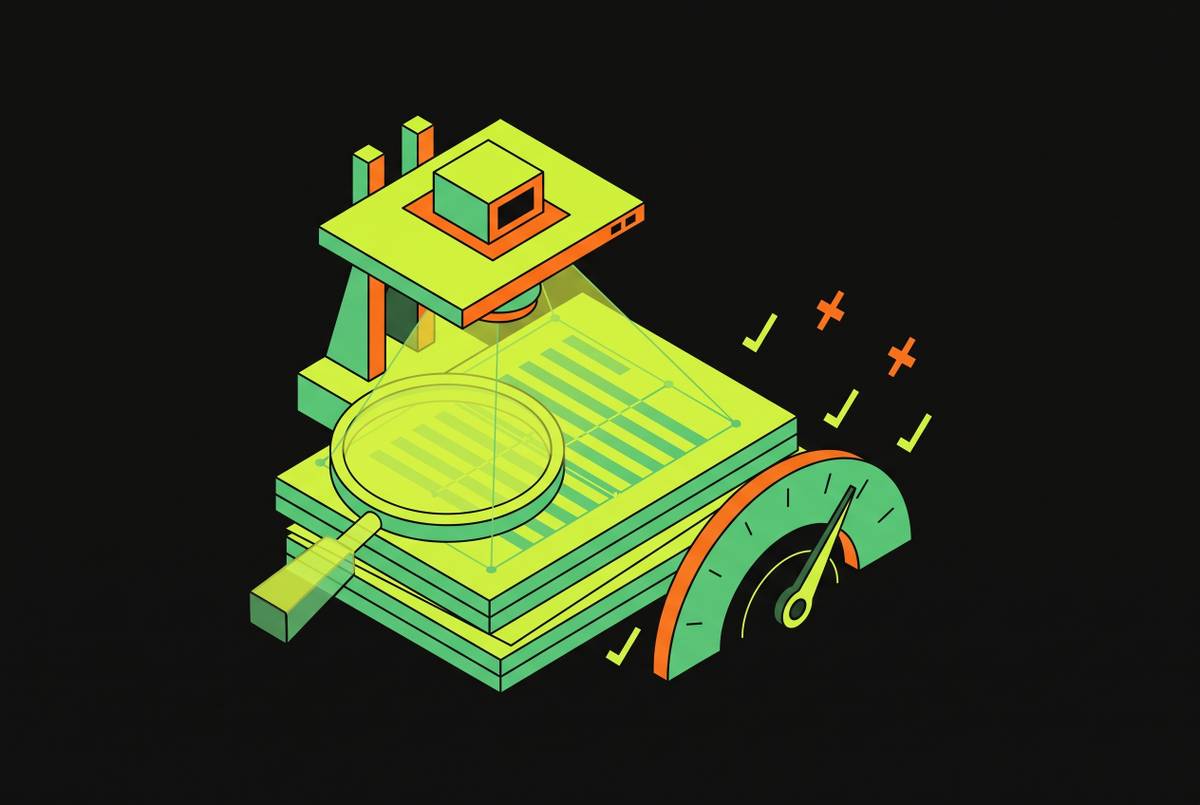
Post-edit distance measures how much editing a human still has to do on generated work. On in-voice tasks, a well-tuned adversarial pipeline should push that distance toward zero, so the work left to fix shows how well the pipeline works and brings the cost of editing into view. This connects enforcement to the organization’s workload. Automated gates make human review a decision about whether the content ships.
Building the full terminal-native content pipeline: what the stack actually looks like end to end
A team building this system should begin with a content brief or structured prompt supplied through stdin or a templated CLI command. That input belongs in version control with the codebase. The brief then becomes a managed production input rather than instructions stranded in an editing session.
The generation stage should call a multi-model writing kernel trained on the team’s voice corpus and exposed as a CLI endpoint or API. The kernel drafts, critiques, and revises until the output satisfies its generation rules. Quality gates then evaluate the converged document. Terminology enforcement, banned-phrase detection, JSON or markdown schema validation, and voice scoring provide separate checks, with failures blocking progress to the commit stage.
Accepted output should pass to the CMS or content repository through its CLI or API handoff, using gh or an equivalent where appropriate. A structured commit message should record the kernel version and model council that produced the piece. That record supplies an audit trail for generated work. Human review follows as sign-off, with the reviewer deciding whether the accepted content should be published.
This setup keeps input, generation, verification, and release in the same place where teams work on the codebase. It saves people from copying and pasting between those stages and shows where the work fails the quality checks before final review. Intercom and Slack illustrate the organizational lesson that voice consistency needs enforcement at generation and comes at a cost. Without it, human review can consume more effort than writing from scratch.