Content Marketing Infrastructure for Technical Startups
Treat content generation like software: version models, share context, and automate quality gates.

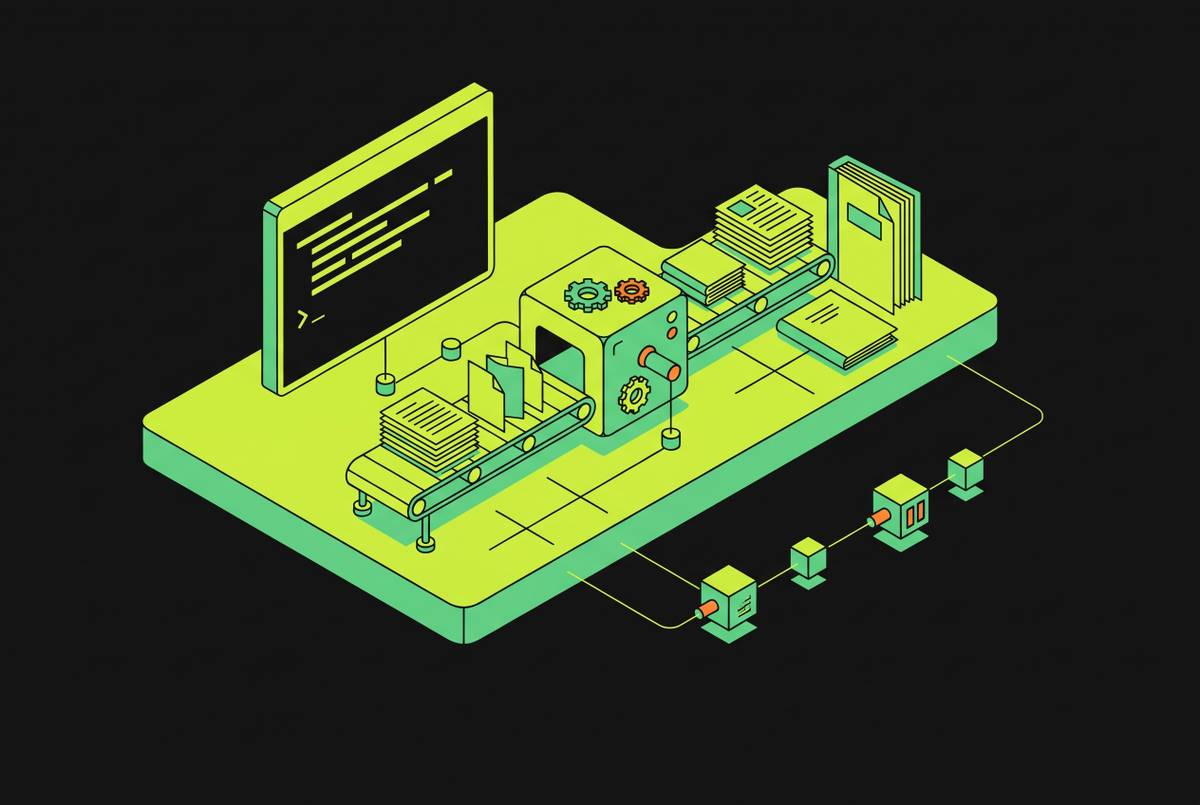
AI writing tools for developers belong in a content infrastructure stack where models can be swapped, research context is shared, voice instructions are versioned, and quality gates are automated. For technical startups producing blogs, project overviews, and documentation, the strongest architecture treats writing quality and voice fidelity as engineering constraints. Faster generation alone does not make a dependable publishing system.
Why technical startups treat content marketing as a production problem rather than an infrastructure problem
A technical startup would not deploy software without tests, versioning, and a review process, yet its content operation can lack all three. The same team that carefully specifies data pipelines, CI/CD systems, and API architecture may assemble content tools only when a publishing deadline demands them. Software is treated as a system to design, while content is treated as work to finish.
That production-first framing makes tool acquisition look like progress. A writing tool accelerates drafting, a research tab supplies background, and a grammar checker cleans up the result. But these components do not necessarily share context or enforce a common standard. Without those connections, people become the orchestration layer, moving information between tools and judging each output from scratch. As teams need more content, they also have more of that work to do.
How the AI content platform market has split into three architectures, and why that split is itself a design decision
The market offers three distinct architectures, namely all-in-one platforms, API-first stacks, and marketing suites with an AI layer. All-in-one platforms cover the content lifecycle from research and briefing through publishing, distribution, and measurement. Their strength is coordinated production and governance. The trade-offs are less model flexibility, higher per-seat cost, and an upper bound on quality set by the platform’s model choices.
API-first stacks give developers greater control over model selection, costs, and orchestration. OpenAI API, Anthropic API, Groq, and Together AI belong in this tooling layer, although their roles differ. Groq is an inference platform. Together AI provides real-time or batch inference through an API with access to open-weight models. This architecture suits teams prepared to build and maintain content pipelines as they would other data pipelines.
Suite AI layers offer incremental capability inside an existing marketing ecosystem, with shallower AI functionality than dedicated platforms and less freedom to leave that ecosystem. A hybrid can bridge these trade-offs. Many teams use an all-in-one platform for daily production and an API layer for workflows it cannot reach. The architectural decision therefore precedes the demo, turning on whether governance or creative range is more important, whether volume strains per-seat pricing, and whether attribution must reach the CRM.
Why single-model reliance is a structural risk, not just a quality preference
Single-model dependency binds the whole operation to one model’s capabilities and commercial terms. Pricing changes, context window revisions, and capability shifts after updates become risks that the team cannot hedge within its existing pipeline. Task fit also varies between models. Different training approaches produce different strengths and failure modes, so a model suited to drafting is not automatically the strongest choice for analysis or verification.
The deeper cost is homogenization across competing content. When many teams generate through the same foundational model, their outputs regress toward similar phrasing, structures, and defaults. Brand distinction erodes even when individual articles remain fluent. For a technical startup, this is a strategic loss because a recognizable explanation of its expertise becomes harder to distinguish from the surrounding material. More production can then amplify sameness.
Technical accuracy makes this dependency more consequential. Hallucination rates on technical subjects are meaningfully higher than on general marketing copy, while a single-model pipeline has no independent adversarial check on its errors. Asking the same model to reconsider is not equivalent to introducing another model’s failure profile. The argument for diversity is therefore about both resilience and judgment.
What a functioning multi-model content pipeline actually looks like, and where it breaks down
A functioning multi-model pipeline assigns work by role and passes context between stages without manual transfer. Three browser tabs do not provide that architecture. In the weekly SEO article workflow described in practice, a brief goes to an analytical model for keyword and intent mapping, then to a drafting model, and then to a retrieval model for claim verification. A further model or review pass examines tone, nuance, and voice alignment.
Research answers specific questions about what readers ask, what top-ranked content misses, and which claims would strengthen the piece. Drafting uses that research. Separating research from production also avoids asking one generation step to trade investigative depth for fluent prose. The stable element is the role structure.
But adding stages can still make the content worse. Teams lose the benefit when they accept AI output as final, remove human review, or reward an appearance of depth unsupported by substantive explanation. Multi-model orchestration is a structural improvement only when its handoffs preserve evidence and its review stages can challenge the draft.
Why voice fidelity is an engineering constraint, not a style guide problem
Generic models optimize for fluency against their training distribution, creating a mismatch with the goal of fidelity to a team’s published work. Correct grammar does not resolve that mismatch. An abstract instruction to sound direct or technical leaves the model interpreting broad adjectives through its own defaults. Voice enforcement needs a concrete target and a systematic way to detect departures from it.
Prompt engineering with few-shot examples is the easiest approach to put in place. Examples give the model something specific to pattern-match, moving output beyond recognizable similarity toward genuine voice alignment. The accompanying voice document should remain short enough to fit across models without crowding out the content request. For most technical startups, this gets most of the way there at a fraction of the cost and complexity of fine-tuning.
Retrieval-augmented generation adds curated brand examples at generation time. Its limitation is that semantic search can retrieve relevant subject material without selecting the right tone for a new content category. Explicit voice descriptor tags such as “technical”, “playful”, and “direct” address that gap. Fine-tuning takes more investment and calls for a fresh choice about cost and control before a team takes that step. Across all tiers, quarterly reviews and immediate additions to an off-brand phrase avoidance list prevent drift from accumulating between review cycles.
What AI writing tools for developers support terminal, versioned, and scriptable workflows?
Developer-native content tooling uses agent harnesses to make production scriptable rather than dependent on a sequence of browser interactions. Teams work in the terminal, with versioning and pipeline execution shaping how the work gets done. This fits how technical teams already manage software. For engineers writing technical blogs, project overviews, or documentation, the relevant distinction is whether writing can participate in that structure.
Pi illustrates the minimal-harness approach in this tooling layer. Mario Zechner, of libGDX, created the terminal coding harness, which is now owned by Earendil, the company of Flask and Jinja2 creator Armin Ronacher. Pi maintains a system prompt under 1,000 tokens. That makes it a concrete example of lean harness infrastructure, rather than evidence that a large built-in instruction set is necessary for every workflow.
The public repository ecosystem also includes a staged chain in which NotebookLM handles research and a drafting model produces content through research, synthesis, content creation, and publishing. OpenAI’s API Changelog records support for Skills in the Responses API on February 10, 2026. These examples place content work within the agent and API tooling layer developers already use. The lesson for teams building a harness is to make it testable by design, with a quality assert in CI that blocks deployment when output quality drops.
Writing quality gates and automated style enforcement as the testing layer for content
Human review remains necessary, with limited reliability in catching systematic drift across repeated runs and limited scalability as a testing layer. A generation pipeline therefore needs clear acceptance criteria that output must meet before it is published. Otherwise, quality depends on whoever happens to review the latest draft and how much time that person has.
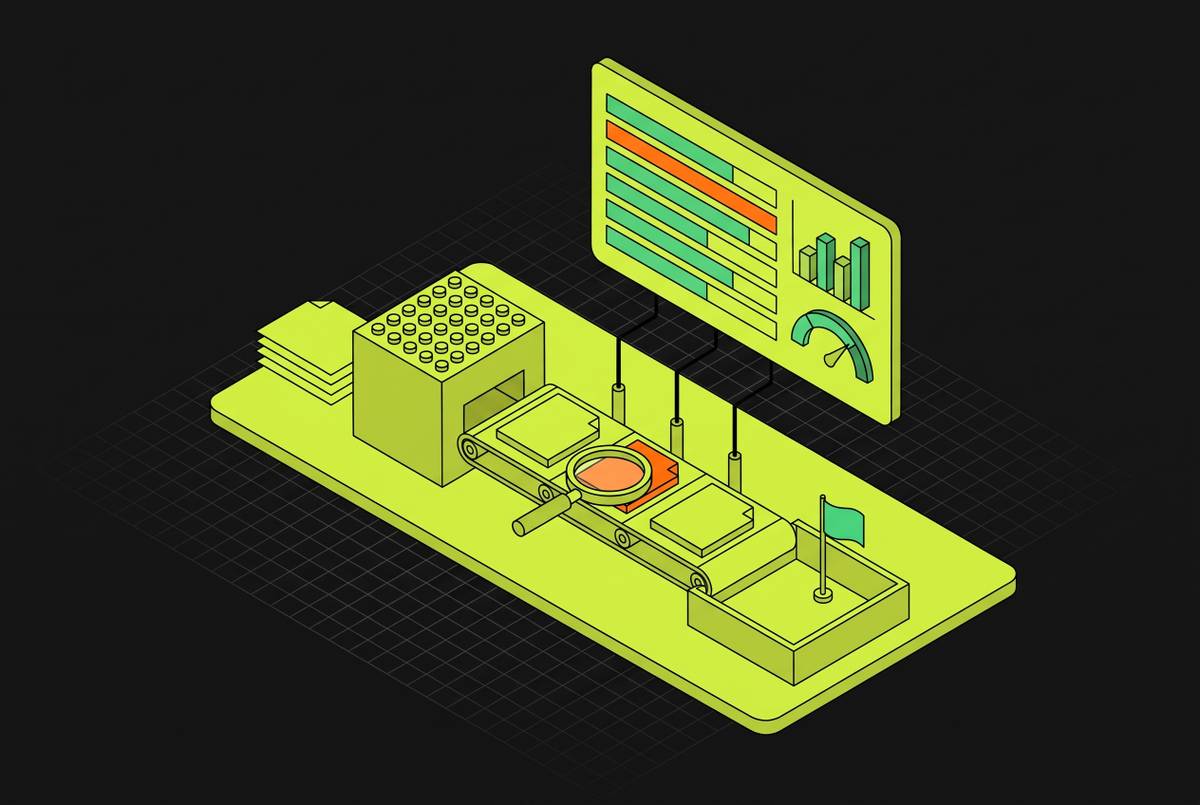
The portable implementation pattern is an EvalCase data structure containing a prompt, an expected signal, and a must-include token. A pass-rate threshold then acts as the release gate. This makes the evaluation artifact analogous to a test file, rather than an informal checklist outside the pipeline. It also gives model and prompt changes a common standard against which to be judged.
Mechanical checks cover a different layer from substantive review. A Flesch target of 60+ can catch density drift, while plagiarism checks target minimal overlap with indexed material. Copyscape explicitly supports checking AI-generated content for text found elsewhere on the Internet. Grammarly Business provides tone analysis, while Acrolinx supports style enforcement. When output drifts beyond defined thresholds for readability, sentiment, or keyword usage relative to a human baseline, prompts are retuned before the next run.
Adversarial review adds the equivalent of code review. One model drafts and another critiques before a consensus output is produced, exposing weaknesses a first draft cannot independently test. Human oversight remains in the loop because automated signals do not establish technical depth or persuasive value on their own. Quality gates make that oversight more focused.
What AI writing detection and model fingerprinting mean for content infrastructure decisions in 2026
Single-model output has identifiable statistical patterns in token distribution, sentence structure, and phrasing. When those patterns repeat across a content corpus, they leave a steadier fingerprint than a single article may show. This reinforces the earlier dependency argument. A team can lose distinctiveness at the corpus level even when individual pieces appear acceptable in isolation.
The EU AI Act’s Article 50(2) requires providers of AI systems generating synthetic audio, image, video, or text to mark output in a machine-readable format and make it detectable as AI-generated, with an exemption for short text outputs. That provider obligation is distinct from a stylistic judgment about whether prose sounds machine-generated. Model diversity’s architectural value lies in disrupting a uniform generation signature through different models and adversarial review.
For developer audiences, recognizable generic AI patterns also create reputational risk because readers are particularly likely to notice them. Model diversity, voice enforcement, and adversarial review challenge repetitive defaults as part of ordinary production, without requiring a separate detection-driven rewriting workflow.
How to approach building a content infrastructure stack when starting from a small technical team
A small technical team should begin by mapping its existing workflow, including every content step, its owner, and where it breaks. Buying a platform before that map risks accelerating a step the team intends to replace. Separating research from drafting establishes the boundary that later model orchestration will use, while addressing the research weaknesses behind many apparent writing problems.
The next decision is the platform category. An all-in-one platform, API-first stack, or suite layer is an appropriate foundation when it meets the team’s governance needs, creative range, publishing volume, and CRM attribution requirements. Voice enforcement should follow before production scales. Short prompts with few-shot examples give models a voice target to start with, and retrieval can draw on the curated brand corpus once it has enough examples.
Quality gates then become first-class pipeline artifacts. The EvalCase pattern makes thresholds explicit and machine-checkable, so acceptance standards can survive team growth and model updates. Model diversity should be an architectural default throughout this work. Each stage needs a swappable model assignment so that changing the strongest model for a task does not require rebuilding the orchestration layer.
These decisions compound as the operation grows. With a foundation that fits together, teams can keep quality, voice, and model diversity as they produce more content, but with a bolt-on workflow, they have to rebuild each time a new requirement comes along. The architecture chosen early determines how far the content operation can develop without being rebuilt. That is why content infrastructure deserves the same rigor as the software infrastructure beside it.