Why Multi-Model Output Evades Single-Model Detectors
Mixing multiple AI models breaks detectors trained on single-model fingerprints.
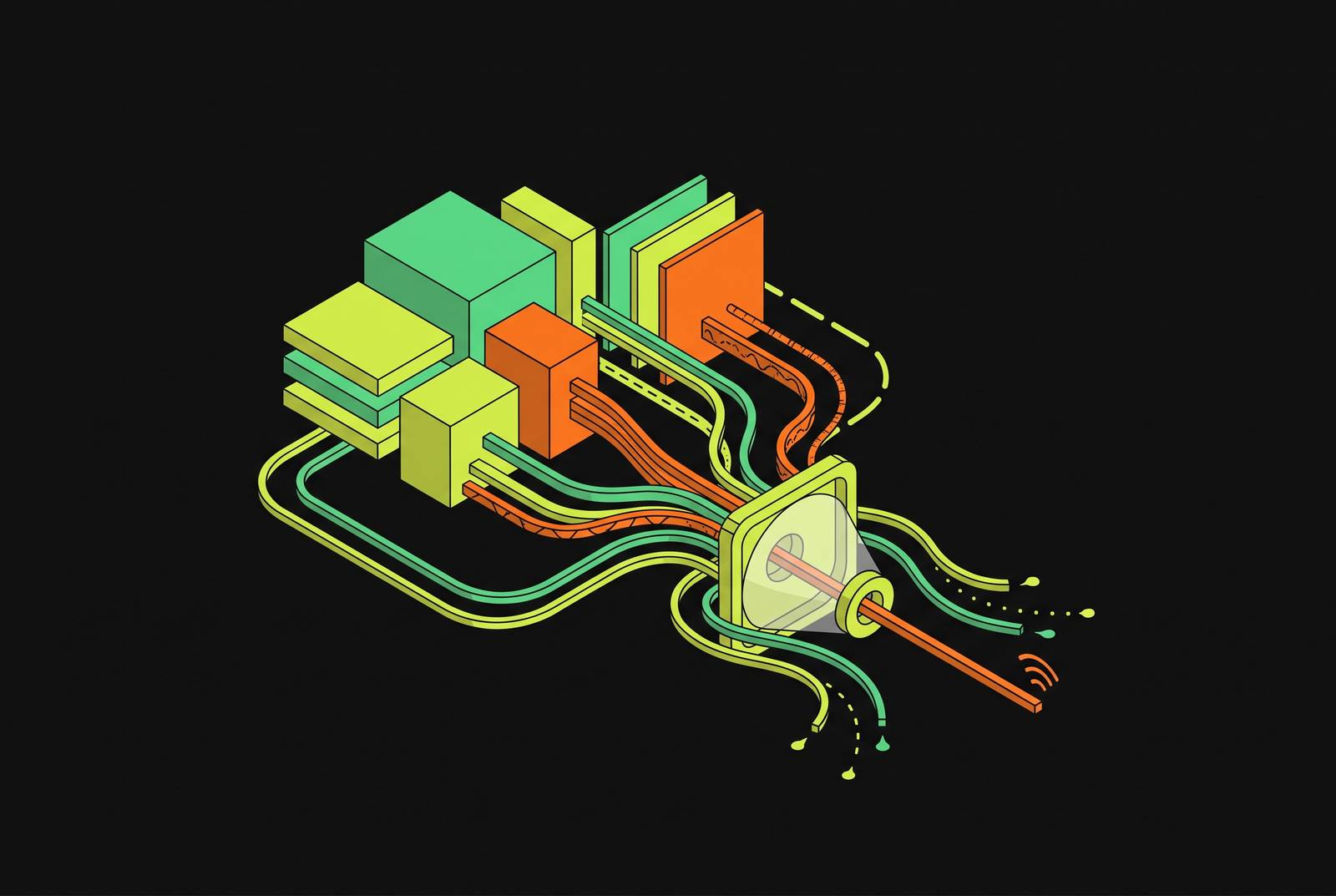
Single-model AI detectors work by learning the statistical fingerprint of one source, and that fingerprint does not survive when the text in front of them was assembled by more than one model. The architecture of multi-model pipelines breaks the core assumption every detector on the market is built on: that there is one generating distribution to find.
How single-model detectors work
A detector trained to flag AI writing is really trained to recognize one thing: the statistical habits of a particular model. It looks at token probability distributions, entropy patterns, lexical richness, and stylometric quirks that a given model produces over and over, and it learns to tell those habits apart from the messier, less predictable habits of human writing. Research on multiscale uncertainty detection points to two weaknesses already baked into this approach. The first is boilerplate dominance: ordinary, high-probability phrasing appears in both human and machine writing, and when a detector leans on common tokens, that overlap drowns out the signal that would actually distinguish the two. The second is brittle point estimates: a detector that collapses its judgment into a single probability score can be knocked off balance by small changes to the text, since that one number was never built to hold up under perturbation. The proposed fix in that line of research, focusing on low-probability tokens and measuring Rényi entropy in that region, sharpens the diagnostic, but it is still calibrated to one generating distribution at a time. It also runs into a second, quieter problem: post-training and alignment leave behind statistical traces that a detector can learn to recognize, while base models, trained simply to match the distribution of human text as closely as possible, leave far fewer such traces. That gap between a base model and its post-trained descendant is the seam adversarial pipelines are already learning to work through.
Why the fingerprint dissolves when output crosses model boundaries
Agents equipped with a base language model have been shown to assemble full responses out of that model's own samples and get past commercial detectors doing it. The mechanism is not disguise, it is substitution: a detector trained on one model's fingerprint has nothing to find once the tokens in front of it were never generated by that model in the first place. The clearest demonstration of this is HALO, short for Hiding Authorship via Language-model Orchestration, where Claude Opus 5, running inside a Claude Agent SDK harness, orchestrates a locally run OLMo-2 base model and builds final responses in which up to 90% of the tokens come from that base model. Those tokens carry neither a watermark nor the post-training signatures that detectors are trained to catch, because they were never produced by the model those signatures belong to. Under this setup, Pangram v4's detection rate drops sharply, and task quality stays close to what the orchestrating agent achieves on its own across most benchmarks. Paraphrasing-based evasion, the older method of asking a model to rewrite AI text in several passes, does worse on both counts: it reduces detection less effectively and costs more in quality along the way.
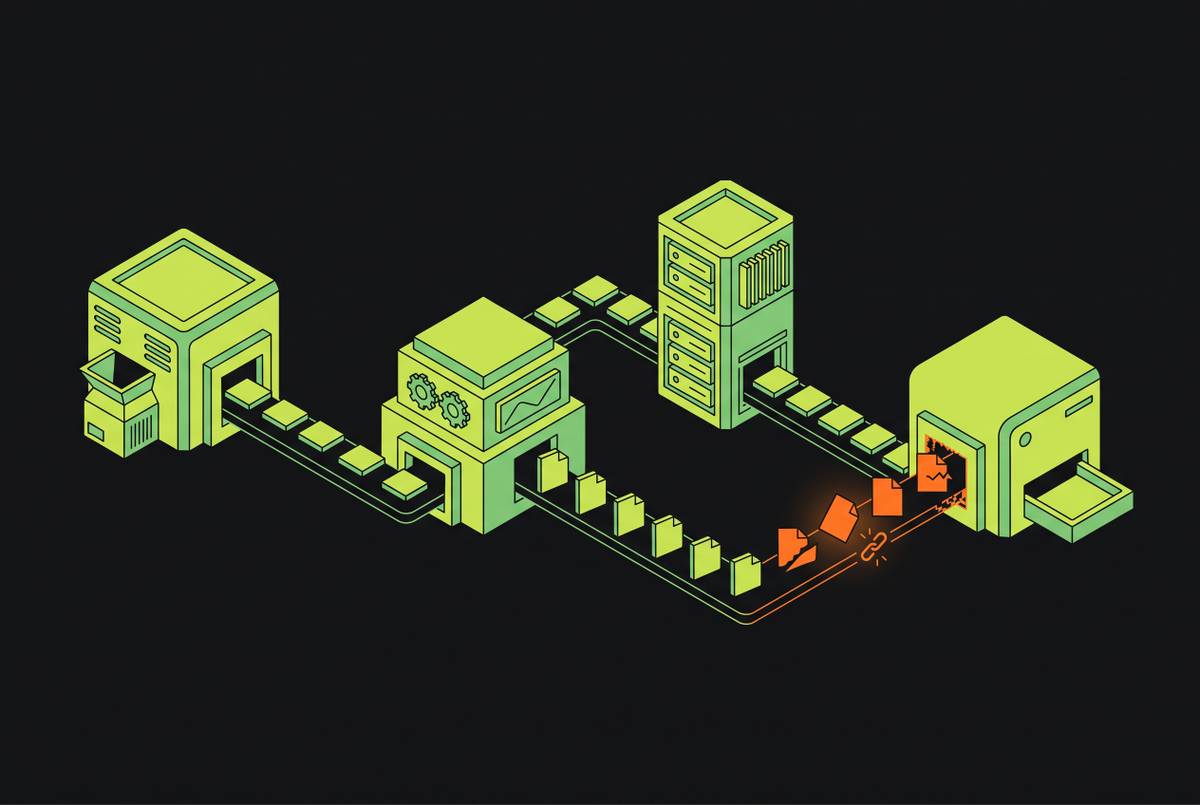
The same logic extends to a statistical watermark, which works by having a model slightly favor certain acceptable tokens that a secret key has singled out, so the text reads normally while carrying an invisible signal. Watermarking schemes built this way run into three structural problems the moment an auditor tries to use them: detection usually requires the original generating model to be present, there is no closed-form way to calibrate confidence, and the scheme depends on having the full secret key sequence. Every one of those three conditions breaks down once a second model rewrites or stitches tokens from the first, because the key-favored distribution that the watermark depends on gets replaced by the second model's own distribution. Routing text through a chain of translation models hits the exact same wall for the exact same reason: each model in the chain applies its own token distribution on top of whatever came before it, and the original fingerprint gets overwritten at every hop.
The out-of-distribution asymmetry that makes structural evasion durable
Not every evasion strategy works the same way, and the ones that last longest exploit a particular asymmetry in how detectors fail. Pushing a model's output away from a detector's training distribution defeats adversarial fine-tuning reliably, while trying to pull output toward the human examples a detector was trained on does not, and that asymmetry survives even when the detector's training data gets patched to close the gap. The University of Technology Sydney's entries in the ELOQUENT 2026 Voight-Kampff task swept the top five positions on the leaderboard by exploiting exactly this asymmetry. Two attack families carried the result: cross-decade register attacks, which prompt a generator to write in an early-twentieth-century English literary register, and stream-narrative attacks, which force modernist stream-of-consciousness form.
The 2025 winning evasion recipes, grammar-level perturbations and back-translation tricks, collapse to near-zero fool rates once a detector has been adversarially fine-tuned against them. The cross-decade register attack does not collapse the same way: it holds a strong fool rate against the same generators and the same adversarially fine-tuned detector. The obvious fix, feeding the detector pre-1923 Project Gutenberg prose so historical register stops being unfamiliar territory, does not close the gap. Retraining on Gutenberg passages slightly increases the evasion rate of the historical-register attack. What this shows is that the evasion is a structural displacement into a region the detector was never built to cover, not mimicry of some specific human style the detector could eventually learn to recognize, and no amount of targeted data-patching can anticipate every region an attacker might move into next. Multi-model pipelines exploit this same asymmetry by architecture rather than by prompt engineering: each model in a pipeline writes in its own register and its own probability region, and the aggregate output becomes a moving target that no fixed training distribution can keep up with.
What optimizing for evasion does to the text
Evading a detector and sounding like a human are not the same goal, and pushing hard on the first one tends to work against the second. SHADE, short for Stochastic Human-like generation via Adversarial Detector Evasion and presented at ELOQUENT 2026, treats evasion as a reinforcement learning problem, fine-tuning LLaMA 3.2 Instruct with Group Relative Policy Optimization and using a surrogate detector's score as the reward signal. Linguistic analysis of the results finds something counterintuitive: the outputs that fool the surrogate detector most reliably are shorter, simpler, and less lexically varied than the model's normal writing. Instead of learning to write more like a person, the model learns to shrink its own footprint until there is less for the detector to grab onto. That strategy also generalizes poorly. Training against one surrogate detector transfers only partway to detectors the system has never seen, and SHADE ranked sixth and seventh in the official competition despite its strong performance against its own training target.
None of this is a flaw specific to SHADE. It follows from the objective itself: any system built to minimize a detector's confidence score will find the cheapest route to a low score, and that route runs through plainer, sparser writing. For anyone producing content rather than running a detection benchmark, the consequence is direct. Naive evasion through post-hoc perturbation produces text that may slip past a detector without giving a reader any reason to trust or enjoy it, trading one failure mode for another.
Why single-model output falls short for content marketing
The same single-source limitation that breaks detectors also breaks brand voice, and it does so before any detector ever runs. A single model, left to its own defaults, writes in a generic, hedged, tonally flat register that readers can spot on their own. That is not an accident of training, it is a direct consequence of it: large language models are trained on the breadth of the internet, so their unguided output sounds like the breadth of the internet, competent and forgettable, a register some practitioners call assistant-speak.
Brand voice is close to the opposite of that: specific sentence-length habits, a defined vocabulary, a consistent stance on the topics a company actually cares about, a particular emotional register that readers learn to recognize. None of those traits survive a single model's defaults without deliberate structural intervention, and without that intervention, AI-generated drafts drift toward formally correct, buzzword-heavy copy with no particular personality behind it. The SHADE finding from the previous section makes this worse rather than better: the same pressure that shrinks a model's footprint to dodge a detector also strips out the stylistic distinctiveness that brand writing depends on. A single model produces one statistical fingerprint for a detector to find and one generic voice for a reader to shrug at, and both problems trace back to the same cause, which is that there is only one source generating every token.
How multi-model architectures solve both problems structurally
Distributing generation across multiple models is not a patch applied after the fact: it eliminates the single-model fingerprint and gives the ensemble the variation needed for voice consistency through the same structural change. When no single model generates every token, no single fingerprint survives intact, and the resulting text sits in a region of the probability space that a detector trained on any one model's output cannot reliably classify. This is the out-of-distribution asymmetry from earlier, applied on purpose: each model in a pipeline contributes its own distributional region, the combined output lands somewhere no single detector was trained to cover, and that position holds up against retraining because the space it occupies shifts with the pipeline's composition.
On the voice side, having multiple models draft, critique, and vote on a piece of writing line by line introduces variation and correction pressure that one model applying its own judgment to its own draft cannot produce. That kind of ensemble can be fine-tuned on a brand's own writing so that convergence moves toward that specific voice. Fine-tuning for voice consistency works best when the examples are well chosen rather than simply numerous, and for changes of this kind, well-chosen examples produce more reliable convergence on a target voice than a larger but unfiltered training set. HALO's production architecture shows the token-level version of this same idea: an orchestrating agent handles planning and reasoning while a separate base model handles token generation, keeping capability and provenance in different hands. The extra computation that recursive review requires catches stylistic drift from a brand voice and also catches the flattening that SHADE showed evasion-optimized writing falls into.
Where watermarking fits into the regulatory backstop
Watermarking is a real technical mechanism backed by a real regulatory mandate, and it still runs into the same wall that statistical detectors do. Article 50 of the EU AI Act took effect on August 2, 2026, requiring providers of generative AI systems to mark their content in a machine-readable way, with providers of systems already on the market before that date given until December 2, 2026 to comply. A long list of major developers, including OpenAI, Anthropic, Meta, Google, and Microsoft, signed the voluntary Code of Practice on Transparency of AI-Generated Content. A statistical text watermark works at the point of token selection: among the words a model would plausibly choose anyway, it slightly favors the ones a secret key has marked out, so the finished text reads normally with nothing visibly appended.
The fragility here is the same one already described for detectors generally. When a second model rewrites or stitches tokens from the first, the key-favored distribution the watermark depends on gets replaced by that second model's own distribution, and the watermark dissolves at the point where the two models meet. In HALO's testing, pipeline composition of this kind reduced soft watermarking's detection effectiveness to a simulated 10% at a low false-positive rate. Watermarking schemes carry the same three structural problems for a regulator trying to audit them that they carry for any other auditor: detection usually needs the original generating model present, there is no closed-form calibration, and the scheme depends on having the full secret key. Watermark fingerprinting through distillation into model weights runs into a related trade-off of its own: a stronger fingerprint signal degrades the quality of open-ended writing, and weakening the fingerprint to preserve quality sacrifices detectability, with no setting that gets both. None of this makes the regulatory effort pointless. The mandate is real and the intent behind it is sound, and the honest conclusion is that watermarking has a genuine structural limit in any production environment where more than one model touches the text before it reaches a reader.
What practitioners should build in the detection arms race
The arms race between detectors and generators currently favors whoever is trying to get past detection, because the architectural diversity available to a multi-model pipeline grows faster than any single training distribution can track. Commercial detectors do well against raw, unmodified output from one model, and detection rates drop substantially the moment even basic structural diversity enters the picture, whether through stitching, register shifts, or pipeline composition, as the HALO results show directly. Several major universities, including UC Berkeley, Vanderbilt, Johns Hopkins, Michigan State, Northwestern, UT Austin, and Australian Catholic University, have already restricted or disabled Turnitin's AI detection module. A separate study found the tool flagged a majority of essays from non-native English speakers as AI-generated, and that bias pushed false-positive rates high enough to make the tool a liability rather than a safeguard for the institutions using it.
Betting a content operation's quality control on single-model detection means building on ground that keeps shifting underneath it. Building for voice quality and structural diversity from the outset is the steadier bet. Developer-facing tools already make multi-model pipelines practical to build: command-line tools let developers work with models directly inside a project directory, reading files and running checks, and configuration files can hold style constitutions that act as a simple, direct way to feed a brand's own writing into the system. Routing infrastructure that spans many models across providers lets a team assign tasks by capability and cost, saving cheaper models for classification and short responses while reserving stronger ones for synthesis and judgment calls that need more reasoning. Open-source patterns already show the shape of this: self-hosted multi-agent systems that handle planning, drafting, brand voice, and platform-specific formatting as separate stages, alongside harnesses that scan a codebase for product claims and check copy against them, built to install as a Claude Code plugin, a Cursor rule, or a section of an AGENTS.md file. Writing quality checks built the way code tests are built, with models drafting, critiquing, and voting on a piece before it ships, catch the same stylistic flattening that evasion-optimized writing falls into, and they hold voice fidelity steady across repeated revisions. The more of this that runs through an ordinary API rather than a standalone interface, the more easily it fits into workflows that already exist, and simple components that each do one job tend to fit together more cleanly than a single system trying to do everything at once.
Sources
- Team DArgk at the 2026 ELOQUENT lab for evaluating generative language model quality: Residuals of Humanity: AI Detection Evasion via GRPO Fine-Tuning
- UTS at ELOQUENT 2026 Voight-Kampff: structural shifts in AI writing bypass state-of-the-art detectors
- Agents Can Use Base Models to Evade AI Detection Bhuwan Dhingra Danish Pruthi~
- On the Salience of Low-Probability Tokens for AI-Generated Text Detection: A Multiscale Uncertainty Perspective
- Language Model Fingerprinting Requires Rethinking Watermark Teachers
- ChainMark: Model-Free LLM Watermarking with Closed-Form Calibration