Writing Harnesses vs Off-the-Shelf AI Writing Tools
Harnesses enforce voice and accuracy through architecture, not just prompts.
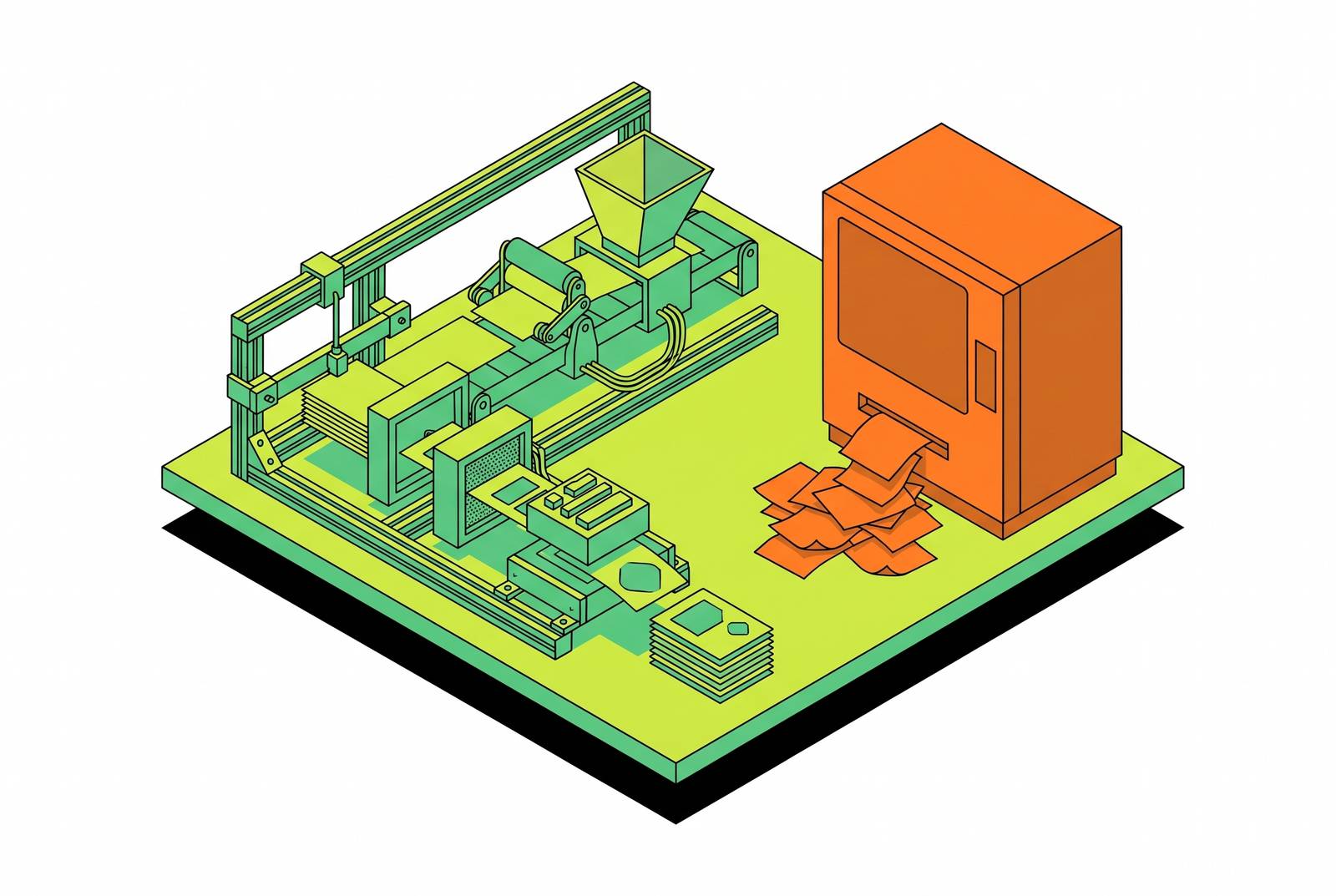
Writing harnesses and off-the-shelf AI writing tools differ most in architecture. A harness surrounds generation with persistent rules, memory, verification, and independent review. A conventional wrapper mainly packages prompts around a foundation model. A harness can enforce a particular voice, while a conventional wrapper can merely ask the model to approximate it.
Why the same underlying model produces such different output across tools
A team moves to a new writing tool, keeps the same underlying model, and receives the same generic prose through a different interface. Yet another system built on that model turns out work that is very different. The model alone cannot explain the gap. The distinction lies in what each system supplies before generation and what it accepts afterward. Changing the interface does little if the process beneath it remains a single prompt followed by a single draft.
Most dedicated AI writing tools package GPT, Claude, Gemini, or proprietary fine-tunes with templates, tone controls, and publishing integrations. These wrappers do useful work in narrow formats. An advertising template or product-description template can encode the structure that makes that particular output effective. When the task is bounded, a well-designed prompt can remove much of the effort of specifying it.
A long document must keep the same voice across sections, separate claims backed by evidence from made-up claims that sound true, and build an argument without explaining the same things over and over. A prompt can request those qualities, but a single-pass architecture has no independent mechanism for enforcing them. More templates do not resolve that limitation unless the system also changes how it evaluates and revises drafts.
What a writing harness actually is and what it adds to the model
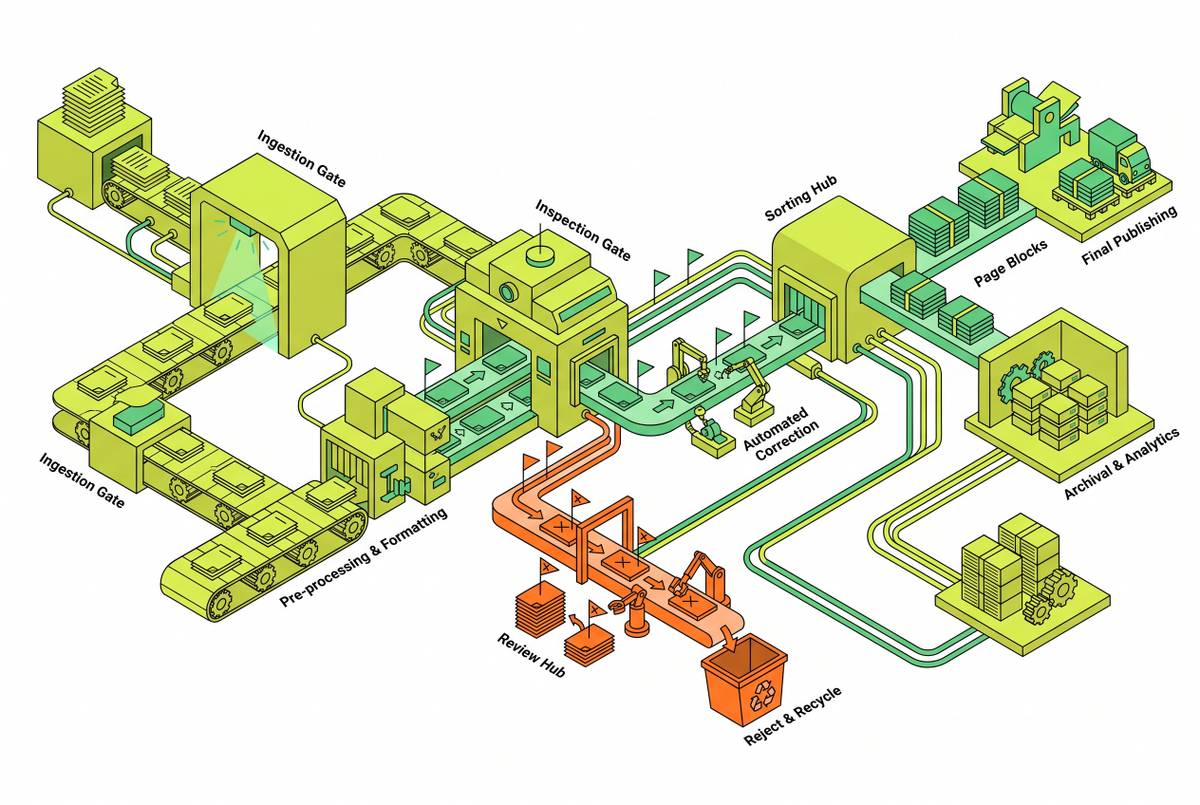
A writing harness is an execution environment that constrains what generated text is allowed to pass. Before drafting begins, it loads persistent voice rules, a brand corpus, banned phrases, and approved messaging. Those constraints belong to the workspace rather than depending on someone remembering to paste them into each request. Generation starts within an established context. The model writes an intermediate artifact.
The draft then moves through distinct operations. A brief becomes an outline, sections are drafted separately, and voice scoring, fact verification, and style linting examine the result before a human checkpoint. Each stage can reject the work and send it back for revision. A second model or council critiques the draft and votes on whether it passes, so acceptance does not depend entirely on the generating model’s judgment. The process continues until the work satisfies the review conditions.
Concrete implementations show why this is an architectural category. A claim-provenance and brand-compliance harness can scan a codebase for product truth, then lint copy against that source through a plugin or an AGENTS.md section. Another implementation separates research, outlining, section drafting, voice scoring, fact-checking, and SEO into independently testable stages in Next.js and FastAPI. These are not simply longer prompts.
For developers, the analogy is CI/CD for prose. Vale can check generated documents against house-style rules written in YAML, while an independent review looks for failures that fixed rules cannot describe. As with linters and code review bots, the surrounding environment catches mistakes rather than leaving every correction to a human editor.
Why single-model, single-pass generation produces recognizable, generic prose
Every model has learned stylistic tendencies as well as knowledge. Those tendencies affect word choice, qualification, sentence structure, and the amount of explanation it supplies. Repeated use of the same model therefore produces recognizable clusters of prose even when the topics change. This is not simply a capability problem. A capable model can still default to language that sounds polished, neutral, and interchangeable.
A voice field does not remove those defaults. Instructions to avoid exclamation points or assume an expert reader may conflict with patterns that the model has learned to favor. Without persistent examples and a separate enforcement step, the system has no reliable way to stop those patterns returning as a document develops. Such competent prose without a distinctive owner is commonly called “assistant-speak. The same prompts can also lead to different voices across GPT-4, Claude, Llama, and fine-tuned variants because the models still differ even when given the same instructions.
Google DeepMind’s SynthID Text embeds watermark signals during token selection. Such signals can survive copy-paste and light editing, although paraphrasing or a full rewrite can weaken or remove a watermark. Watermarking and generic style are not identical phenomena. Both nevertheless show why output cannot be understood only as the visible execution of a prompt.
The European Commission published its first draft code of practice on marking and labelling AI-generated content in 2025 under Article 50. That transparency context makes provenance relevant beyond editorial taste, but it does not make detection the main test of good writing. The structural concern is narrower. When one model produces the entire document without independent correction, both its stylistic defaults and any embedded provenance signals can remain unchallenged.
How adversarial multi-model review changes what the output converges on
Adversarial review introduces a judgment that the generating model does not control. A second model checks the draft against clear requirements and flags failures instead of just carrying on with the first model’s attempt. A council can make that acceptance decision across several models. The draft must pass an independent review before it can move on. This changes the target from producing a plausible answer to satisfying a set of constraints.
Different models can also serve different stages. One may generate factual outlines, another draft prose, and a third assess stylistic adherence. Splitting the work this way keeps one model’s strengths and weaknesses from shaping every step in the pipeline. However, the presence of several models is not sufficient by itself. The adversarial mechanism is the ability to reject an intermediate output and require a revision that addresses the criticism.
Iteration is therefore part of the architecture. Recursive review gives the system repeated opportunities to correct factual and stylistic failures before delivery. Revision by another model can also break up patterns typical of a single model, including some provenance signals. Its editorial purpose is to make the draft converge on defined standards.
This added control introduces engineering work of its own. Bappy et al. 2026 describe adversarial risks in multi-agent pipelines, where intermediate outputs cross agent boundaries and create attack surfaces and failure propagation paths. A writing harness must take those paths into account, since adding agents does not by itself make the system more reliable. CI/CD checks and linting provide the corresponding error-correction environment. Independent review is useful only when the pipeline also controls how failures move through it.
What brand voice fidelity actually requires from an architecture
Brand voice needs a steady point of reference so that changes in voice can be judged. A short description such as technical, opinionated, or plainspoken leaves much for the model to interpret. A corpus of approved writing supplies examples of how those qualities appear in actual sentences. Voice rules that stay in place set clear limits alongside those examples.
An LLM generates the text, a fact database lookup supports claim verification, and an embedding-based classifier scores tone and style. Human approval then serves first-time campaigns or high-spend channels, with monitoring after publication. These checks answer different questions. A draft can use approved facts yet still sound wrong, just as an on-brand sentence can make an unsupported claim.
A trained voice system need not mean fine-tuning the foundation model. Loading a brand corpus and voice profile into a persistent workspace can deliver much of the benefit without the same preparation burden. Fine-tuning on brand examples runs $2,000–$8,000 in API fees alone, making it an enterprise-scale consideration supported by thousands of on-brand examples. It remains an option. The central requirement is that examples and validation operate before and throughout production, rather than arriving as an editing request at the end.
Style linting makes the explicit portion of that standard automatic and auditable. Vale-style YAML rules can check every generated document for banned words and enforce limits on sentence length and rules for heading case. Those rules remove repeatable violations from the discretionary editing workload. Running them in CI gives prose a shared place to enforce rules, just as code style has across a codebase.
How developer teams build writing pipelines that treat content as a software problem
Pipelines built by developers bring generation into the infrastructure they already use to deliver work. One implementation uses a single command to orchestrate an AI news workflow, with the Claude API generating articles, a shell script validating frontmatter, git auto-committing, and Cloudflare auto-deploying. The terminal becomes the entry point for content production. This example demonstrates orchestration rather than proving every dimension of editorial quality, but it establishes that writing can move through automated validation and deployment.
A provider-agnostic AI marketing engine on GitHub extends the same approach through a CLI that drops into a host project. Its workflow moves from brief to script, creative, caption, compliance, publishing, metrics, and ads. LLM, image, and video providers can be exchanged through environment variables. Provider choice is separated from workflow design.
Style enforcement can follow a two-layer pattern within that workflow. Traditional linters execute in seconds and catch deterministic formatting problems, performing the prose equivalent of ESLint and Prettier checks. A custom script then sends the PR diff and style rules to an LLM, parses its response, and posts structured review comments. This second layer can assess naming quality, documentation completeness, and pattern adherence that fixed rules miss.
GitHub had hundreds of public repositories matching content-generation and content-pipeline topics as of 2026. The significance is that practitioners are building usable infrastructure around these operations. Writing tests and adversarial councils can serve as quality gates before a human editor receives the work. As with software tests, their value comes from making the acceptance conditions in a brief executable.
What to evaluate when choosing between a harness and an off-the-shelf tool
The practical choice begins with the bottleneck. Teams constrained by speed and volume in templated formats can be well served by off-the-shelf tools. Ads, product descriptions, and email subject lines benefit from templates that encode recognizable requirements. High-volume, low-differentiation work may not justify a more elaborate system. For solo creators and small teams, integration work can consume more time than improved drafts save.
Harness engineering has a real cost in complexity. Independent reviewers, persistent context, verification stages, and pipeline integration require engineering work that a packaged tool removes. Low-stakes content may not warrant that investment. The relevant comparison is therefore not which product generates the most impressive isolated sample, but whether the editorial work it leaves behind exceeds the effort of building and maintaining stronger controls.
A harness is a better use of resources when the same voice must hold across dozens of pieces per month or when errors in facts and compliance pose serious risks. A claim-verification layer can catch hallucinated facts, nonexistent clauses, and incorrect feature lists before manual editing. Persistent voice validation is especially useful when the desired style contradicts common model defaults across a long document. Provenance-sensitive publishing adds another reason to examine architecture, though review and rewriting do not remove transparency obligations.
A team should check whether voice rules apply before drafting, whether an independent model reviews the output, and whether the system works inside its delivery pipeline. It should also distinguish a corpus-trained voice system from a tool that interprets a fresh voice prompt each time.